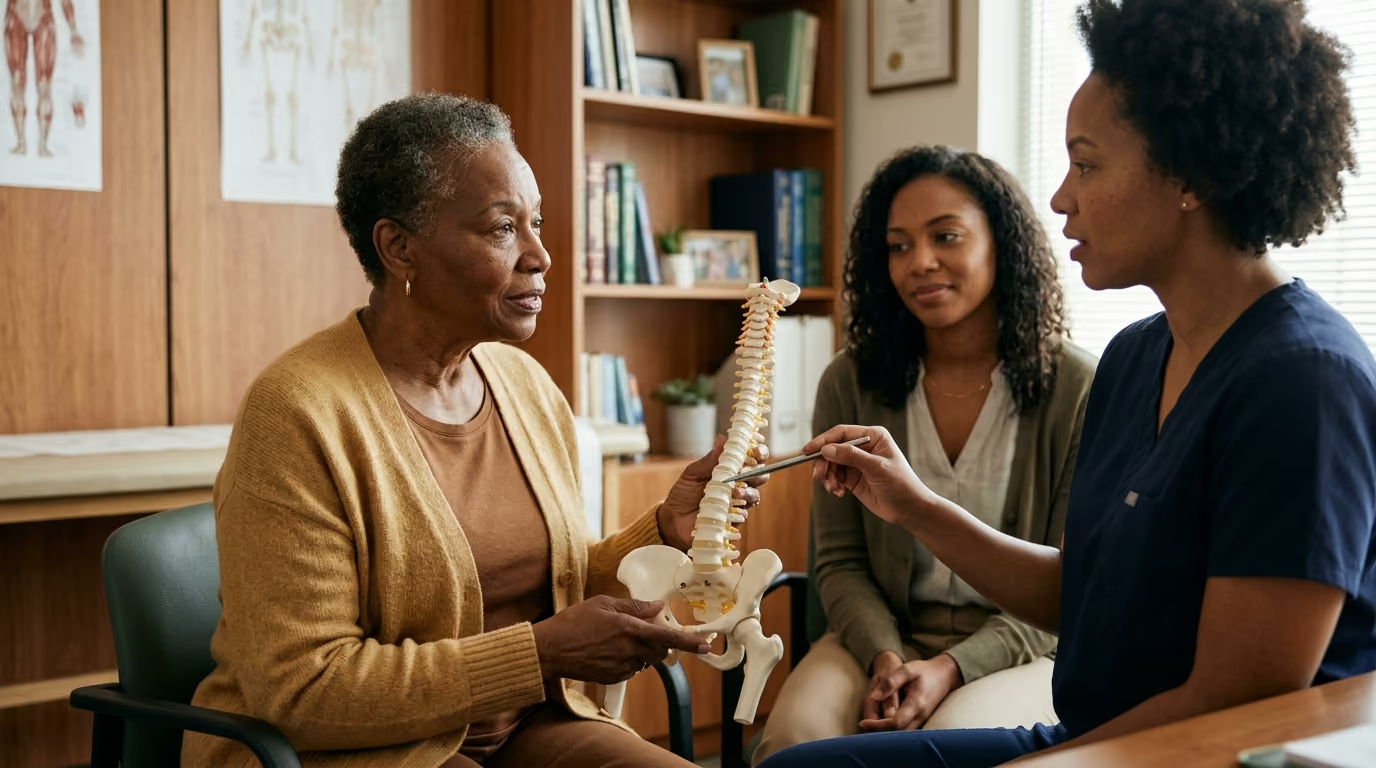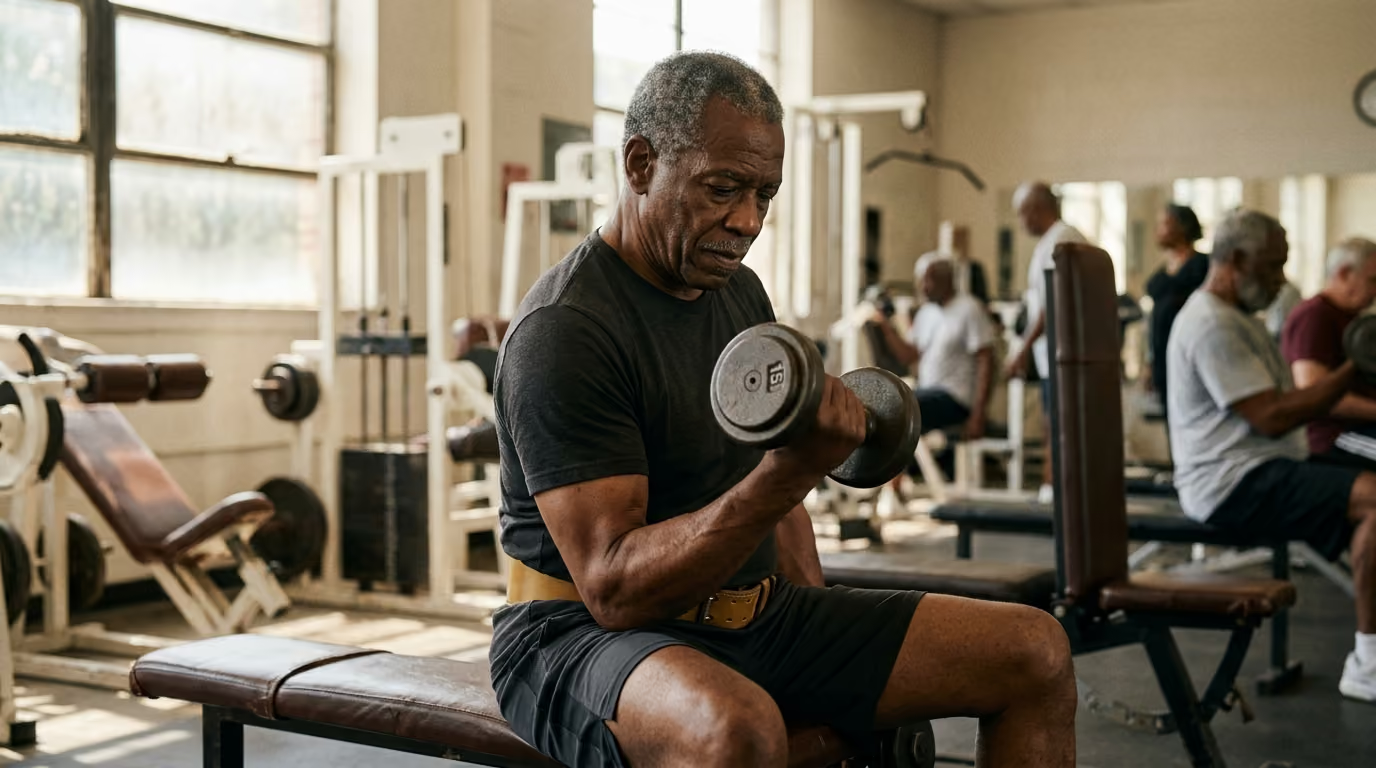

Age-related physical decline is not inevitable, because targeted resistance training restores functional strength, reverses sarcopenia, and improves longevity across older adult populations.





Popular conversations about longevity frequently treat muscle growth as the primary metric of physical success. Many assume that if an exercise routine does not produce visible hypertrophy, it has failed to protect the body against aging. Yet clinical trials consistently demonstrate that older adults can achieve transformative gains in force production, movement speed, and daily physical independence without adding a single measurable gram of muscle mass.
Understanding the true biology of aging requires separating muscle size from muscle performance. The human nervous system, tendon architecture, and cellular metabolic machinery can adapt profoundly to mechanical load even when muscle protein accretion remains flat. To evaluate what exercise can and cannot accomplish over a lifespan, one must look directly at the clinical trial evidence, the observational mortality data, and the specific physiological mechanisms that govern aging muscle.
This guide provides a comprehensive, research-backed examination of resistance training for older adults. It outlines the diagnostic definitions of age-related muscle impairment, evaluates clinical trial outcomes across strength and physical performance, details practical programming frameworks, and analyzes what modern science says about mortality and physical resilience.
To understand the research on aging and exercise, readers must first separate four distinct outcomes that health media often blur together. These four categories are related, but they are driven by different biological processes and do not always change in tandem.
Muscle strength represents the maximal amount of force an individual can generate during a specific movement. Strength is typically measured using one-repetition maximum tests or calibrated handgrip dynamometers. It reflects not only the cross-sectional area of the muscle fibers, but also the ability of the central nervous system to activate those fibers rapidly and efficiently.
Muscle quantity and quality refer to the physical dimensions and tissue composition of the skeletal muscle. Quantity describes the cross-sectional area or total volume of the muscle tissue. Quality describes tissue composition, including the level of fat infiltration, connective tissue density, and force generation capacity per unit of muscle mass.
Physical performance measures whole-body, coordinated functional capacity in daily tasks. Standard clinical assessments include normal gait speed, the five-times sit-to-stand test, the timed up-and-go test, and the Short Physical Performance Battery. These tests require coordination, balance, joint range of motion, and sensory feedback alongside raw muscular force.
Health outcomes and longevity represent hard clinical endpoints. These include all-cause mortality, cardiovascular disease incidence, metabolic disorders, institutionalization rates, and fall-related hospitalizations. Conflating these four categories leads to major misinterpretations of the scientific literature. An older individual can achieve substantial improvements in strength and physical performance while showing no statistically significant change in total muscle mass or long-term mortality risk.
Age-related muscle loss is not merely an aesthetic concern. It is a recognized clinical condition with formal diagnostic criteria established by international medical consensus groups. Understanding these criteria helps clarify why modern geriatrics focuses primarily on neuromuscular performance rather than body weight alone.
The European Working Group on Sarcopenia in Older People revised its diagnostic framework to place muscle strength at the forefront of clinical assessment. Sarcopenia is defined as a progressive and generalized skeletal muscle disorder associated with an increased likelihood of adverse outcomes, including falls, fractures, physical disability, and mortality. The diagnostic algorithm follows a three-stage sequence designed for clinical practice.
The first stage identifies low muscle strength. When a patient demonstrates poor grip strength or a slow chair-stand time, sarcopenia is considered probable. This initial threshold prompts clinicians to initiate lifestyle interventions, including structured resistance training, without waiting for specialized body composition scans.
The second stage confirms the diagnosis by evaluating muscle quantity or quality. Low muscle quantity is established using dual-energy X-ray absorptiometry, bioelectrical impedance analysis, or computed tomography to calculate appendicular skeletal muscle mass. When low strength is accompanied by low muscle quantity or compromised muscle quality, the diagnosis of sarcopenia is formally confirmed.
The third stage identifies severe sarcopenia. When an individual demonstrates low muscle strength, reduced muscle quantity or quality, and poor physical performance on functional tests, the condition is categorized as severe. Poor physical performance is typically marked by a slow walking speed, an impaired Short Physical Performance Battery score, or an inability to complete basic functional tasks.
This strength-first model represents a major evolution in clinical thinking. Sarcopenia cannot be identified solely by looking at a person or checking their body weight. An individual with high body fat can possess low muscle strength and compromised muscle quality, a condition known as sarcopenic obesity. Tracking functional metrics provides a much clearer picture of aging physiology than relying on bathroom scales or subjective appearance. Exploring resources on the biology of aging and longevity science can help readers contextualize how these structural cellular changes develop over decades.
The scientific evidence evaluating resistance exercise in older populations is extensive. Randomized controlled trials consistently demonstrate that older skeletal muscle retains a remarkable capacity to adapt to mechanical overload.
An overview of systematic reviews examining resistance training across adult populations documented substantial functional improvements. Interventions lasting as few as six weeks increased one-repetition maximum strength by a mean difference of 12.8 kilograms compared with non-exercising control groups. The same analysis reported an average improvement of 2.6 additional chair stands during standardized timed testing. These pooled findings confirm that mechanical training stimulates rapid neuromuscular adaptations across diverse age groups.
In older adults with diagnosed sarcopenia, the clinical trial data demonstrate clear functional efficacy. A systematic review published in 2022 evaluated the effects of structured exercise programs in older adults with sarcopenia. The analysis found that resistance training and multicomponent exercise regimens significantly improved muscle strength and physical performance measures. Aerobic exercise performed in isolation failed to produce statistically significant strength improvements in the subgroup analyses, highlighting the specific role of mechanical tension.
A subsequent meta-analysis published in 2025 evaluated 12 randomized controlled trials in older adults with sarcopenia. The researchers observed moderate, statistically significant improvements in handgrip strength and Short Physical Performance Battery scores following resistance training. However, the analysis did not find a statistically significant change in the skeletal muscle index. The participants grew stronger and moved more effectively without displaying a measurable expansion in overall muscle mass.
These findings were supplemented by a 2026 meta-analysis of 13 randomized trials encompassing 546 sarcopenic participants. This analysis reported a statistically significant mean improvement in handgrip strength of 2.95 kilograms, a gait speed increase of 0.15 meters per second, and a 1.79-second reduction in the time required to complete the five-times sit-to-stand test. It also noted a small but statistically significant increase in appendicular skeletal muscle mass index of 0.25 kilograms per square meter.
Comparing these large systematic reviews illustrates an essential scientific principle. While strength gains and physical performance improvements occur consistently across almost all clinical trials, muscle mass gains remain variable. Differences in study duration, training intensity, measurement tools, and baseline nutritional status influence whether measurable hypertrophy occurs. Functional recovery does not require substantial muscle growth to provide meaningful physical resilience.
The divergence between strength gains and muscle growth in older adults is explained by the biological mechanisms that govern neuromuscular adaptation. When an older adult initiates a resistance training program, the initial improvements in force production stem primarily from neural adaptations rather than structural muscle fiber enlargement.
Neural adaptations include enhanced motor unit recruitment, increased motor unit firing rates, and improved synchronization of nerve impulses. With advanced age, the nervous system often struggles to recruit high-threshold Type II muscle motor units. Resistance training forces the central nervous system to re-engage these dormant motor units. It also reduces co-activation of antagonist muscle groups, allowing agonist muscles to exert force without unnecessary internal resistance.
Structural changes also occur within the connective tissues and remaining muscle fibers. Resistance training increases tendon stiffness, which allows force generated by muscle contractions to transfer more rapidly to bone. This mechanical stiffening improves rate of force development, a critical factor in recovering balance during a sudden trip or slip. While massive hypertrophy is rare in frail populations, resistance exercise can stimulate moderate protein synthesis and slow the ongoing loss of Type II muscle fibers.
Metabolic adaptations within skeletal muscle tissue operate independently of visible muscle enlargement. Resistance exercise stimulates the translocation of GLUT4 glucose transporters to the muscle cell membrane, improving whole-body glucose clearance and insulin sensitivity. It also supports mitochondrial enzymatic activity and improves microvascular perfusion within the tissue. Readers seeking a deeper scientific breakdown of cellular energy pathways can consult detailed reviews on cellular health and metabolism.
The relationship between resistance exercise and human longevity is an active area of epidemiological research. While the popular press often claims that lifting weights directly extends human lifespan, scientific integrity requires distinguishing between observational associations and demonstrated causal effects.
A 2019 systematic review and meta-analysis of large observational cohorts evaluated the relationship between resistance training and mortality outcomes. The authors reported that individuals who engaged in regular resistance training experienced a 21 percent lower risk of all-cause mortality compared with non-exercisers (hazard ratio 0.79). When resistance exercise was combined with regular aerobic activity, the statistical association was even stronger, demonstrating a 40 percent lower risk of all-cause mortality (hazard ratio 0.60). In that specific analysis, associations with cardiovascular mortality were borderline, and no statistically significant association with cancer mortality was observed.
A comprehensive meta-analysis published in 2022 confirmed and expanded upon these findings. The researchers analyzed multiple prospective cohort studies and found that resistance exercise was associated with a 15 percent lower risk of all-cause mortality, a 19 percent lower risk of cardiovascular mortality, and a 14 percent lower risk of cancer mortality.
The 2022 study also included a detailed dose-response analysis that revealed a non-linear relationship between weekly resistance training volume and mortality risk. The maximum estimated risk reduction occurred at approximately 30 to 60 minutes of resistance training per week. Beyond 130 to 150 minutes per week, the statistical reduction in all-cause mortality diminished, forming a J-shaped or U-shaped curve in the epidemiological models.
These epidemiological findings provide compelling support for public health guidelines, but they must be interpreted with caution. Observational studies cannot prove that resistance training causes an extension of lifespan. Confounding variables, such as overall socioeconomic status, dietary habits, genetics, and baseline physical health, can influence both exercise adherence and survival rates.
People who are already free of chronic illness are far more likely to lift weights consistently than individuals with preclinical disease, introducing potential healthy-user bias. To date, no randomized controlled trial has tested whether initiating a resistance training program extends human lifespan over several decades. The true value of resistance training lies in its proven ability to preserve strength, physical autonomy, and functional resilience during life, rather than an unproven promise of added years.
Designing a safe, sustainable resistance program for older adults does not require specialized gym facilities or complex periodization models. It requires applying consistent mechanical tension to all major muscle groups and progressing the workload systematically over time.
Different training tools offer unique advantages and trade-offs for older individuals. The choice of equipment should prioritize safety, accessibility, and repeatability over novelty.
Free weights, such as dumbbells and kettlebells, allow for natural movement patterns and challenge stabilizing musculature. They are adaptable for home or gym settings. However, free weights require adequate motor control, grip capacity, and balance to avoid dropping loads or losing posture during training.
Fixed weight machines provide guided movement paths and built-in safety stops. They isolate specific muscle groups effectively while minimizing the risk of losing balance. Machines are especially useful for older adults with severe weakness or joint instability, though they require access to a fitness facility and can feel restrictive for individuals with atypical limb proportions.
Elastic resistance bands represent a low-cost, highly portable alternative. Systematic reviews in sarcopenic populations have shown that elastic band training can produce significant improvements in muscle strength and functional performance. Bands offer variable resistance that increases as the material stretches, reducing joint stress at the start of a movement. They are particularly suitable for home-based rehabilitation programs.
Bodyweight movements, such as chair squats, wall push-ups, and step-ups, require no equipment and directly mirror daily physical tasks. They build baseline functional capacity and confidence. The primary challenge with bodyweight exercise is adjusting the resistance load precisely as the individual becomes stronger.
Public health authorities provide clear baselines for weekly training frequency. The World Health Organization recommends that older adults perform muscle-strengthening activities involving all major muscle groups on two or more days per week. The American College of Sports Medicine supports this recommendation, emphasizing regular full-body participation over unnecessarily complicated split routines.
For older beginners, an initial loading target of 10 to 15 controlled repetitions per set allows the individual to learn proper mechanics without inducing severe joint strain or muscle soreness. As movement proficiency develops, the resistance can be increased toward an 8 to 12 repetition range. Those pursuing maximal strength development can eventually use heavier loads around 80 percent of one-repetition maximum for 2 to 3 sets, while general hypertrophy targets often suggest accumulating approximately 10 weekly sets per muscle group.
A resistance training program must introduce progressive overload to maintain its effectiveness. As the neuromuscular system adapts, the original stimulus becomes insufficient to drive further adaptation. Clinicians recommend adjusting variables one at a time to monitor tolerance accurately:
Progression must be gradual and individualized. Changing multiple training variables simultaneously makes it difficult to determine which factor caused excessive fatigue, joint pain, or functional improvement.
While progressive resistance training builds the muscular capacity to generate force, strength training alone does not eliminate the risk of falls. A comprehensive exercise strategy for older adults must integrate balance, stability, and sensory coordination.
The World Health Organization explicitly recommends that older adults, especially those with poor mobility or a history of falls, engage in multicomponent physical activity on three or more days per week. These programs must combine functional balance exercises with progressive strength training at moderate or greater intensity.
A sudden loss of balance requires rapid sensory integration, nervous system signaling, and coordinated muscular reaction. If an older adult possesses strong leg muscles but suffers from impaired proprioception, delayed vestibular feedback, or poor directional coordination, high muscular strength cannot prevent a fall.
Effective multicomponent training includes exercises that challenge the base of support, such as tandem standing, single-leg balancing, and controlled lateral stepping. It incorporates dynamic movement tasks like obstacle negotiation, backward walking, and rapid weight shifting. Combining these drills with compound resistance movements, such as sit-to-stands and loaded carries, builds physical resilience that transfers directly to real-world environments. Readers evaluating clinical anti-aging strategies can examine broader longevity interventions and therapeutics to understand how exercise integrates with emerging medical therapies.
Exercise programs cannot follow a single standardized prescription. An active 70-year-old master athlete requires a vastly different training stress than a frail 82-year-old recovering from prolonged bed rest.
This individual is fully ambulatory, lives independently, and has no severe cardiovascular or orthopedic limitations, but has not engaged in structured exercise for years.
The initial goal is establishing routine, reinforcing joint stability, and learning movement mechanics. The individual trains two non-consecutive days per week, performing one to two sets of basic compound movements targeting the legs, chest, back, and core. Resistance is kept at a moderate intensity where three to four additional repetitions could be completed at the end of each set. Progress is achieved by adding repetitions over the first month before introducing heavier loads.
This individual moves cautiously, relies on assistive devices for long distances, and expresses anxiety regarding balance and falling.
Training shifts toward a multicomponent format performed on three days per week. Sessions begin with supported balance drills using a sturdy handrail or chair back for security. Resistance exercises focus on functional movements, such as rising from a raised chair, performing wall push-ups, and conducting seated leg extensions with light resistance bands. Supervised progression focuses on reducing upper-body hand support during sit-to-stand transitions and improving walking confidence.
This individual has received a diagnosis of sarcopenia characterized by low grip strength, slow chair-rise performance, and reduced muscle mass.
The intervention utilizes progressive resistance training designed to challenge neuromuscular recruitment. Training is conducted two to three times per week using elastic resistance bands, cable machines, or free weights. The target repetition range is 8 to 12 repetitions per set, adjusting resistance so the final repetitions feel challenging while maintaining safe form. Functional progress is tracked every six to eight weeks using standardized physical performance measures rather than body composition scans alone.
This individual is middle-aged or older, highly functional, and motivated by long-term disease prevention, functional autonomy, and metabolic health.
The program pairs progressive resistance training twice weekly with regular aerobic conditioning. Sessions cover major muscle groups using compound free-weight and machine exercises with moderate to heavy loads. The primary focus is consistent adherence, sustainable volume, and avoiding orthopedic overuse injuries. The individual avoids extreme, high-fatigue training protocols in favor of steady, year-round consistency.
Aging skeletal muscle experiences changes in microvascular circulation, satellite cell responsiveness, and protein turnover rates. As a result, older adults often require dedicated recovery windows between high-intensity resistance sessions.
Clinical guidance recommends allowing at least 48 hours of recovery between intense training sessions targeting the same muscle group. If an individual experiences persistent joint discomfort, prolonged muscle soreness, or uncharacteristic systemic fatigue lasting more than 48 hours, the training volume, frequency, or load should be reduced. Adherence over months and years remains far more important than the intensity of any single workout session.
Navigating the scientific research on resistance training requires recognizing what clinical trials have proven and identifying where evidence remains preliminary or nuanced.
A major point of nuance involves quality-of-life outcomes. A meta-analysis published in 2022 examined 21 randomized trials involving 1,610 older adults to evaluate how resistance exercise affects specific domains of daily well-being. The researchers found statistically significant improvements in physical functioning, mental health, bodily pain perception, general health perceptions, and depressive symptoms.
However, the same analysis did not find statistically significant improvements in subjective vitality scores, overall physical component summary scores, total quality-of-life composite scores, or six-minute walk test distances. This demonstrates why researchers must report specific outcome measures rather than claiming that resistance training uniformly improves every metric of health and well-being.
Another critical limitation is the duration of available clinical trials. Most randomized controlled trials on exercise in older adults last between 8 and 24 weeks. While these studies demonstrate rapid initial improvements in neuromuscular force, motor coordination, and functional speed, they do not provide long-term data on lifelong disease trajectory or maximum biological lifespan. Extrapolating a 12-week trial result into an assumption of permanent life extension is scientifically invalid.
Readers must also avoid assuming that one universal exercise protocol works for all individuals. Subgroup analyses in sarcopenia meta-analyses reveal substantial heterogeneity based on participant age, baseline health status, and intervention duration. While moderate-intensity training twice weekly represents an excellent baseline recommendation, individual exercise selection and progression rates must adapt to personal health constraints.
To interpret exercise science research and clinical diagnostics accurately, readers should understand the formal definitions and diagnostic validity of key performance biomarkers and terminology.
One-repetition maximum (1RM) represents the maximum amount of weight an individual can lift for a single repetition through a full range of motion with proper form. It is the gold standard for measuring dynamic muscular strength in clinical research settings. In older or clinical populations, 1RM is frequently estimated using submaximal prediction equations to minimize musculoskeletal strain.
Handgrip strength serves as a validated, rapid surrogate biomarker for generalized muscular force. Measured using an isometric hydraulic dynamometer, low grip strength is strongly correlated with increased surgical complications, longer hospital stays, and functional decline. The European consensus defines clinical thresholds for low strength at less than 27 kilograms for men and less than 16 kilograms for women.
The Short Physical Performance Battery (SPPB) is a standardized clinical assessment tool evaluating balance, gait speed, and chair-rise capability. Scores range from 0 to 12 points, with higher scores indicating superior physical function. A score of 8 or lower indicates impaired physical performance and identifies individuals at high risk for functional dependence and falls. Readers can learn more about clinical tracking tools by reviewing resources on age, biomarkers, and diagnostics.
Appendicular skeletal muscle mass index (ASMI) is calculated by dividing total lean mass in the arms and legs (measured via DXA) by height in meters squared. This metric isolates functional skeletal muscle from fat mass and bone mineral content, providing the primary quantitative biomarker used to confirm a diagnosis of sarcopenia.
Sarcopenia is a progressive skeletal muscle disorder characterized by low muscle strength, reduced muscle quantity or quality, and impaired physical performance.
Hypertrophy refers to an increase in the cross-sectional area and volume of skeletal muscle fibers resulting from muscle protein synthesis exceeding muscle protein breakdown.
Motor unit recruitment is the process by which the central nervous system activates specific motor neurons and their associated muscle fibers to produce muscular tension.
Rate of force development (RFD) is a measure of how quickly an individual can develop force at the onset of a muscular contraction, representing a critical determinant of balance recovery.
Multicomponent training is an exercise methodology that combines strength, balance, aerobic, and functional movement drills within a structured training regimen.
Rating of perceived exertion (RPE) is a standardized subjective scale (typically ranging from 1 to 10) used to quantify the physical effort and fatigue experienced during exercise.
Progressive overload is the systematic and gradual increase of mechanical stress placed upon the skeletal and muscular systems to drive continuous physiological adaptation.
Scientific research demonstrates that skeletal muscle and the nervous system retain their adaptive capacity across the entire human lifespan, making progressive resistance training the most effective clinical intervention available for preserving physical independence and functional strength in older age.
Stay current with research on aging biology, biomarkers, nutrition, therapeutics, peptides and longevity technology. AgeAmaze reports what the evidence shows, where uncertainty remains and which claims still need stronger data.


Follow AgeAmaze for careful reporting on what longevity science can show today and what still needs stronger evidence.
read the Blog