

Biological age isn't a single measurement. Explore how epigenetic clocks, clinical markers, and functional tests track different aspects of human aging.





Biological age represents a collection of model-based estimates and clinical measurements designed to summarize the physical condition of human cells, rather than a single standardized quantity.
Understanding biological age requires looking at the actual mechanics of cellular measurement. The testing process relies on identifying specific proxy markers that change predictably over time. Scientists use these proxies to build mathematical models of physiological decline. The accuracy of any biological age test depends heavily on this foundational design.
Every measurement tool follows a specific operational sequence to generate a result. Researchers must carefully translate biological reality into quantifiable data points. This translation process involves several distinct phases of laboratory analysis and algorithmic computation. The following steps outline how modern biological age models actually process human data.
1. Collecting the biological inputs
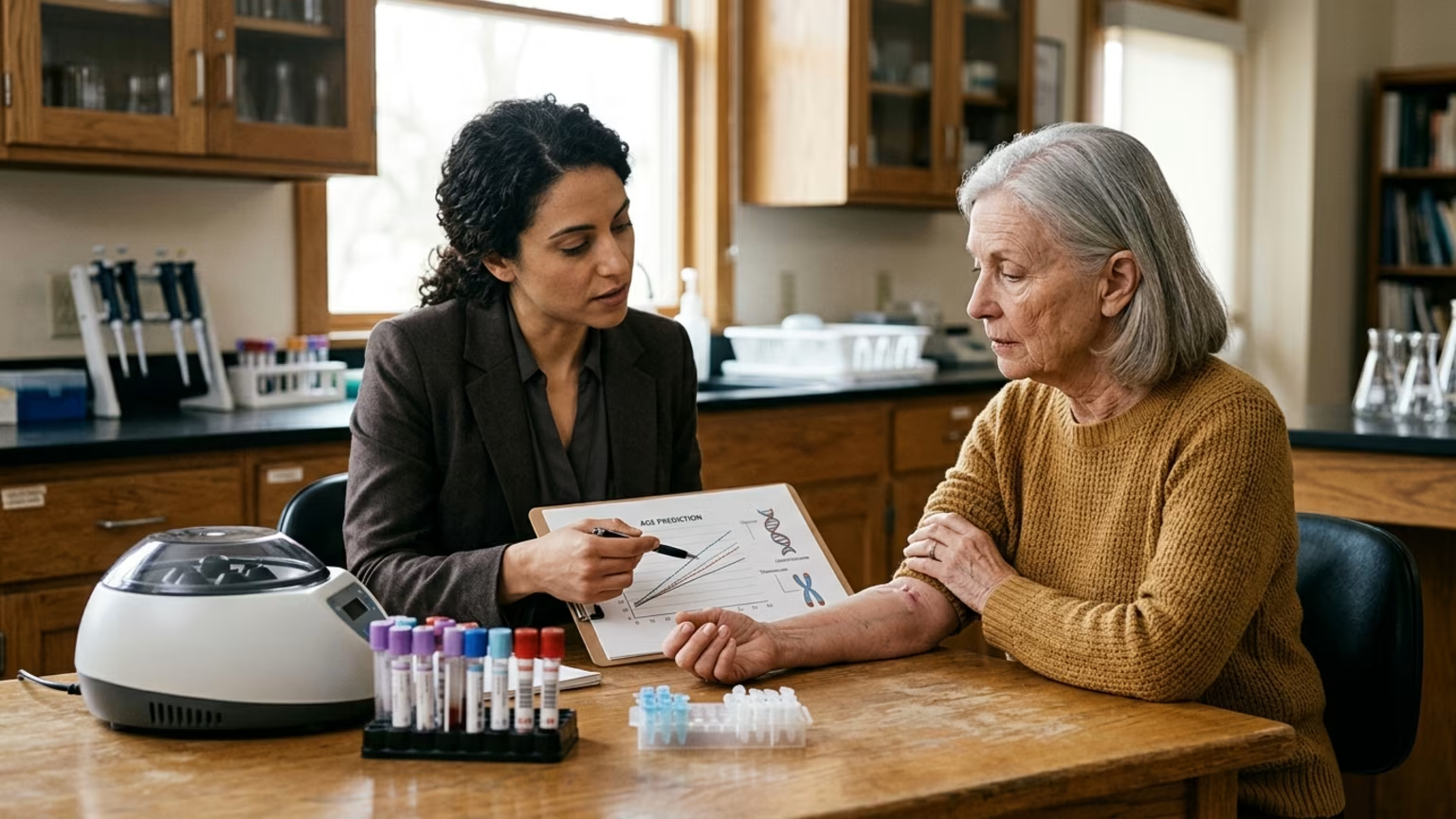
Researchers first gather specific biological material from a study participant. This typically involves drawing a blood sample to secure circulating cells and genetic material. The quality of this physical sample dictates the reliability of any subsequent laboratory testing. Different biological systems require distinct inputs, so a single blood draw might only capture a limited view of systemic health.
Some specialized models require tissue biopsies or saliva samples instead of blood. These alternative collection methods provide different perspectives on cellular stress and metabolic function. A tissue-specific sample often reveals localized aging patterns that differ from whole-body estimates. Therefore, the choice of the initial input material fundamentally shapes the final measurement.
2. Quantifying specific molecular targets
Once the laboratory secures the sample, technicians isolate the specific physiological markers required by the model. For epigenetic clocks, scientists map DNA-methylation patterns across thousands of specific genomic sites. These methylation patterns act as chemical switches that regulate how genes operate within the cell. Other testing methodologies might quantify structural markers, such as telomere length, instead.
Clinical biomarkers focus on entirely different sets of measurable targets. A standard clinical model might compile age-related chemistries, such as circulating inflammatory proteins or metabolic hormones. Every specific measurement tool relies on its own distinct set of carefully selected physical inputs. This diverse targeting explains why different tests often measure entirely different biological processes.
3. Processing data through reference algorithms
The quantified laboratory data then passes through specialized mathematical algorithms. These computer models assess the user's specific biological inputs by comparing them against massive reference datasets. Because different aging clocks are trained to recognize different targets, the algorithms evaluate the data in highly specific ways. The mathematical model weights various molecular factors based on known correlations with physiological decline.
Algorithm design plays a massive role in determining what a specific test actually measures. A model trained to predict chronological age will process methylation data differently than a model trained to predict mortality risk. Researchers must carefully select an algorithm that matches their specific scientific question. If the algorithmic framework is flawed, the resulting data will misrepresent the patient's actual health status.
4. Generating the final comparative estimate
The analytical model ultimately produces a final summary metric for the researcher to evaluate. This final score is often expressed as an age equivalent or a specific pace of aging. Scientists take this generated estimate and compare it against other established health indicators. This broad comparison helps researchers determine if the molecular score accurately reflects the broader physiological reality.
A complete scientific understanding requires evaluating this calculated score alongside actual physical performance. Researchers look for correlations between the model estimate and concrete functional measurements, such as grip strength or mobility. Without this final comparative step, an isolated score provides very little practical medical utility. The true value of the estimate lies in its relationship to observable health outcomes.
Scientists broadly agree that biological aging is far too complex to be captured completely by a single measurement tool or mathematical model. A Stanford Medicine explainer notes that there is no single agreed-upon method for measuring biological age, highlighting the ongoing variability in the field. Because different biological systems yield different signals, researchers understand that a single summary score can easily hide meaningful differences between distinct physiological domains. This widespread agreement emphasizes the need for careful interpretation when reviewing isolated testing metrics.
The scientific community is actively trying to determine how specific proxy scores translate into actual clinical outcomes. Researchers want to know whether a positive shift in an epigenetic clock reliably predicts extended survival. Current evidence cautions against treating any biomarker shift as definitive proof of improved health. Investigators are working tirelessly to clarify the exact relationship between molecular measurements and actual human longevity.
One major area of ongoing investigation involves the surprisingly low correlation between distinct measurement categories. A secondary summary of research by Belsky and colleagues looked at a large sample of 964 people. The clinical analysis found low agreement among telomere length, epigenetic clocks, and basic biomarker composites. Understanding these discrepancies remains a central focus of modern biology of aging and longevity science.
Scientists are still studying why these specific measurement tools diverge and what those divergences mean for overall human healthspan. They are actively mapping the specific cellular pathways that drive the signals in different testing models. The failure of certain models to agree does not necessarily mean that one specific test is inherently flawed. Instead, it suggests that human biology ages across multiple independent systems that do not decline at the exact same rate.
Furthermore, researchers are trying to determine how environmental stressors permanently alter these distinct measurement clocks. Different clinical proxies might capture different types of accumulated damage from environmental exposure. Understanding exactly how external factors influence specific molecular markers remains a massive scientific challenge. Resolving these intricate biological questions is absolutely critical for the future development of validated therapeutic targets.
Another pressing unknown is how to properly calibrate models to reduce standard margins of error. Current algorithmic tools still struggle with precision when applied to individual human patients. As Stanford researcher David Rehkopf notes, there is roughly three years of error in many standard epigenetic clocks. Scientists are constantly refining mathematical algorithms in an attempt to narrow this problematic gap and improve clinical accuracy.
When evaluating longevity research news, readers must carefully identify exactly what endpoint a specific research trial measures. An observed change in a methylation-based model supports a claim that the specific clock score changed. It does not automatically demonstrate improved physical function, disease resistance, or extended survival. Different aging measures often disagree because they are built from different inputs and designed for distinct biological targets.
As longevity experts consistently note, disagreement between specific tests is not inherently proof that one measurement is factually wrong. It simply highlights the profound complexity of tracking cellular health across multiple physiological domains. To build an accurate picture of aging, researchers increasingly rely on diverse, overlapping sources of evidence. A comprehensive assessment requires looking at molecular markers, clinical chemistries, and actual physical performance simultaneously.
Treating a research result as genuinely informative requires understanding the specific target of the underlying measurement tool. Readers should always check whether other relevant health markers moved in the same direction during a clinical trial. When reading an analysis, it is essential to ask whether the chosen endpoint is genuinely appropriate for the primary claim. Relying on a single test score often provides an incomplete view of patient health.
The broader biological age testing landscape offers highly valuable tools for identifying systemic health risks. However, these tools remain specialized proxies rather than definitive, universal answers for patients. Researchers continue to refine epigenetic models, but the fundamental reality of human biology remains incredibly complicated. A single mathematical number cannot perfectly capture the complex, shifting physical condition of the human body.
Ultimately, the concept of biological age remains a collection of targeted estimates, reflecting highly specific fragments of a larger physiological picture. By understanding the mechanical limits of these measurement tools, readers can better evaluate future longevity claims. The body ages across multiple diverse systems at varying rates, defying simple numerical categorization. Like the family of clinical measurements that attempt to track it, human aging is far too complex for a single standardized quantity.
Once a reader understands the distinct targets of different biological age models, the next critical step is evaluating new therapeutic claims using that accurate framework. AgeAmaze clarifies dense scientific papers that are hard for non-specialists to interpret, helping research-minded adults separate validated clinical outcomes from speculative proxy measurements.
Stay current with research on aging biology, biomarkers, nutrition, therapeutics, peptides and longevity technology. AgeAmaze reports what the evidence shows, where uncertainty remains and which claims still need stronger data.




Follow AgeAmaze for careful reporting on what longevity science can show today and what still needs stronger evidence.
read the Blog