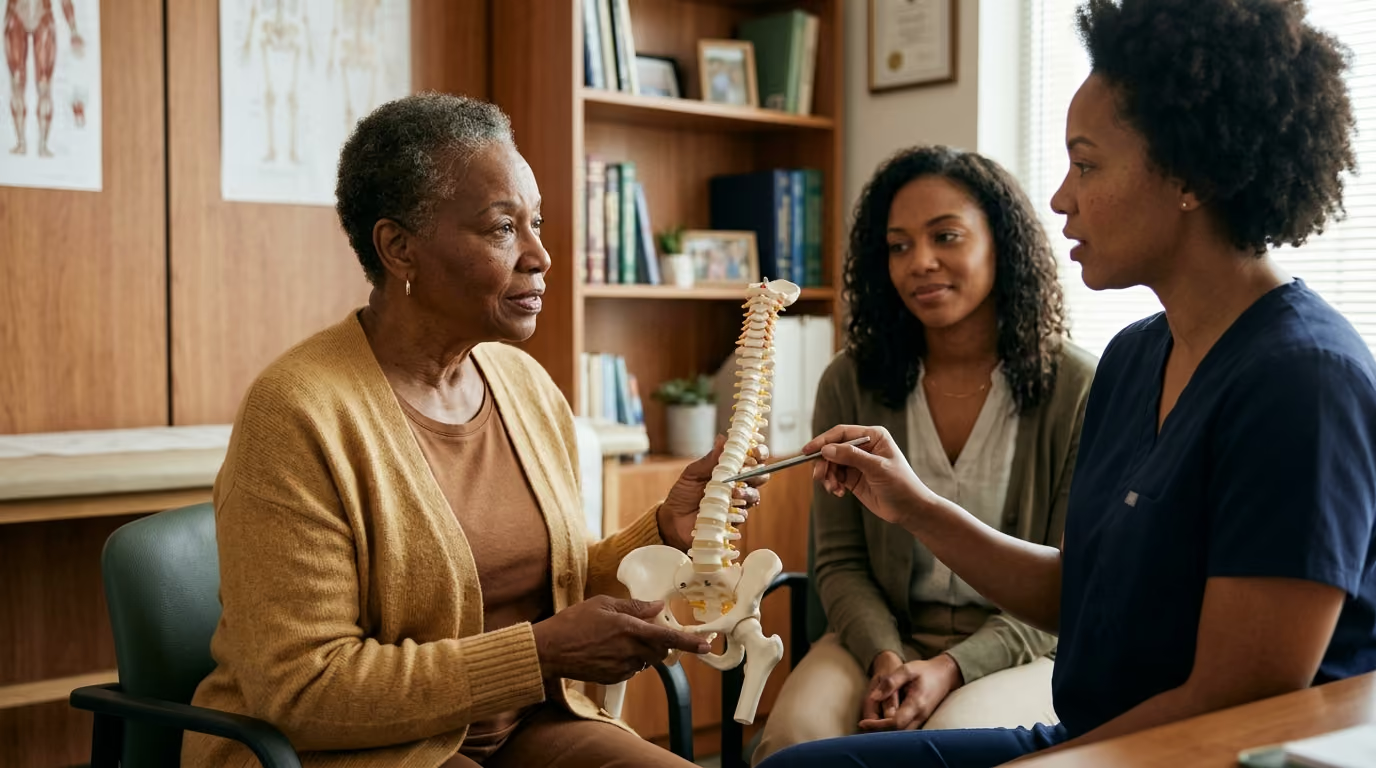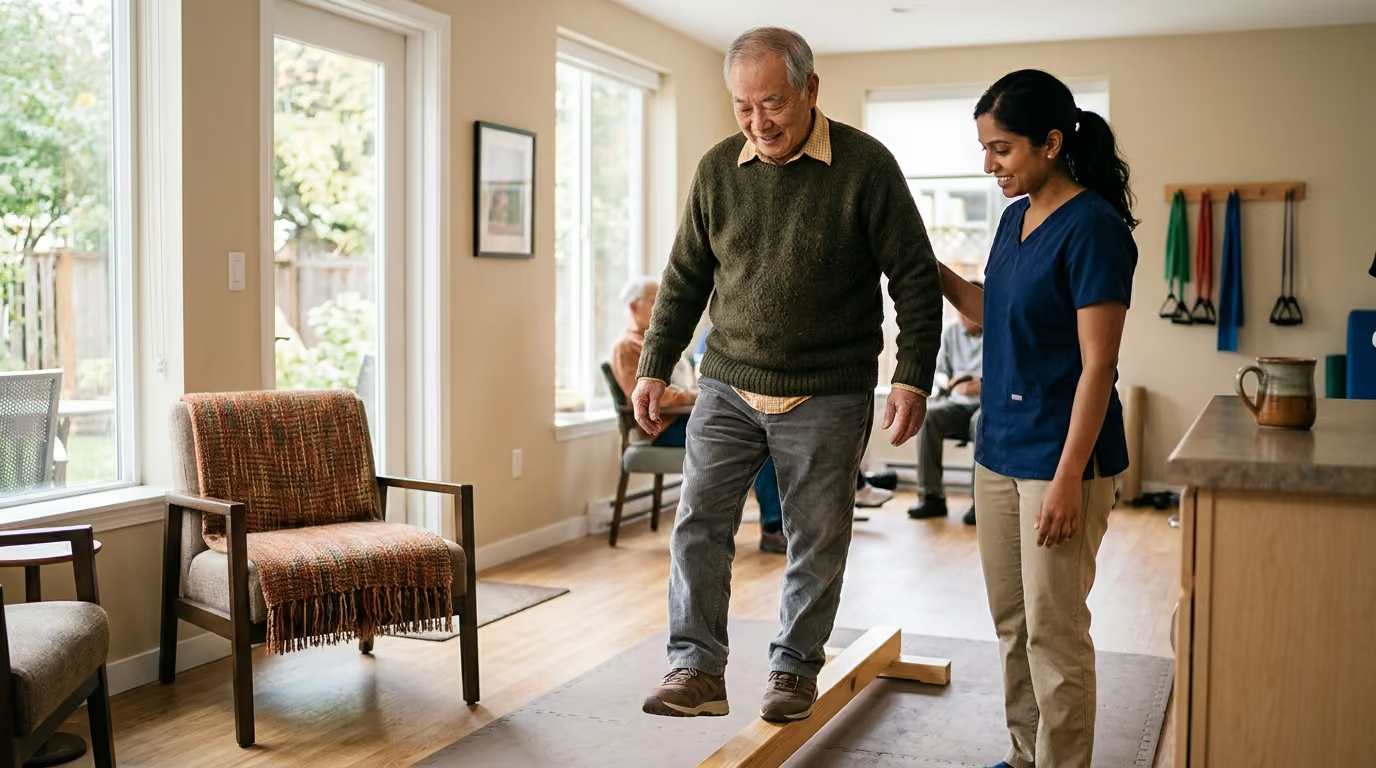

Noticing a steady loss of walking speed or grip strength calls for structured exercise programs, environmental modifications, and assistive tools that preserve personal independence.





An older adult returns home after a brief hospital stay for a respiratory infection. Before the illness, preparing lunch, walking to the mailbox, and managing household chores were seamless parts of their daily routine. Now, standing up from a low armchair causes hesitation, the short walk to the front porch feels exhausting, and fear of falling leads to canceled social visits. This subtle restriction in activity is common, yet it is rarely an unalterable consequence of aging.
Physical rehabilitation, occupational therapy, environmental modifications, and assistive technology offer clear pathways to restore independence. Rather than waiting for catastrophic injury, evidence-based rehabilitation provides tools to maintain function across the lifespan.
Clinical trials show that targeted physical activity, tailored balance training, and structured occupational therapy preserve functional independence in older adults. For example, large trials show that structured physical activity reduces the rate of major mobility disability by 18 percent among at-risk older adults compared to health education. Systematic reviews of community-dwelling older adults demonstrate that progressive exercise programmes reduce the overall rate of falls by 23 percent.
The evidence for geriatric rehabilitation spans multiple scientific tiers. These include randomized controlled trials in community and clinical settings, large-scale systematic reviews, and observational epidemiological data. Laboratory analyses of muscle physiology support the human trial data, showing that neuromuscular plasticity remains active even in advanced age.
Clinical studies in this field assess specific functional endpoints rather than subjective impressions. Common primary endpoints include the ability to complete a 400-meter walk test, incidence rates of injurious falls, and scores on standardized activities of daily living scales. Researchers also track performance markers such as grip strength, gait speed, chair-rise time, and standing balance duration.
Rehabilitation works through distinct neuromuscular and biomechanical mechanisms. Progressive resistance training stimulates motor unit recruitment, enhances muscle fiber cross-sectional area, and improves tendon stiffness. Balance training sharpens proprioceptive feedback from peripheral mechanoreceptors and reinforces vestibular processing in the brain. Occupational therapy and task adaptation reduce the mechanical load and cognitive demand required to execute complex daily activities.
Rehabilitation outcomes vary depending on baseline functional reserve, baseline chronic health conditions, and adherence to therapy protocols. Supervised clinical trial environments often yield higher adherence rates than home-based independent practice. Furthermore, exercise programmes designed for falls prevention show average group benefits, but they do not eliminate individual fall risk entirely.
Rehabilitation is not a method to stop the primary cellular aging process, nor does it reverse irreversible joint damage or advanced neurodegenerative diseases. It does not replace necessary acute medical treatments during an active illness. Instead, rehabilitation optimizes physical performance, adapts task demands, and modifies the physical environment so an individual can function safely within their biological capacity.
Healthy aging is defined by the World Health Organization as the process of developing and maintaining the functional ability that enables well-being in older age. This definition shifts the focus from disease eradication to functional preservation. An individual may manage several chronic conditions while maintaining full independence in the activities they value.
To understand how rehabilitation operates, researchers distinguish between intrinsic capacity and functional ability. Intrinsic capacity encompasses all the physical and mental resources an individual can draw upon. These resources include muscular strength, cardiovascular endurance, sensory acuity, balance, and cognitive function.
Functional ability represents what a person can actually be and do in their everyday life. It includes meeting basic personal needs, learning and making decisions, maintaining personal mobility, building relationships, and contributing to family or community life. Functional ability is not determined solely by physical capacity. It emerges directly from the dynamic interaction between a person's intrinsic capacity and the environment in which they live.
This distinction has profound implications for healthy aging. If an individual experiences a decline in intrinsic capacity due to illness or muscle loss, their functional ability does not have to decline at the same rate. By introducing home adaptations, task modifications, or assistive products, their practical independence can remain intact. Clinicians evaluate both biological capacity and physical barriers to find the most effective combination of interventions. Readers seeking to understand broader aging concepts can review biology of aging and longevity science resources to see how physical function connects with cellular health.
Geriatric rehabilitation requires an assessment model that looks beyond isolated tissue damage. The International Classification of Functioning, Disability and Health, known as the ICF, provides a biopsychosocial framework for describing human health and function. The ICF recognizes that disability is not an individual deficit, but rather the result of complex interactions between health conditions and contextual factors.
The ICF model separates human function into three related levels:
Contextual factors are split into environmental factors and personal factors. Environmental factors include physical architecture, lighting, terrain, assistive devices, social support networks, and community services. Personal factors include an individual's lifestyle habits, psychological resilience, coping mechanisms, and personal history.
The relationship between these components is non-linear. A significant impairment in body structure does not automatically produce severe participation restrictions if appropriate environmental supports exist. Conversely, a minor physical impairment can cause severe activity limitations if the living environment contains insurmountable physical hazards.
Rehabilitation teams use this framework to answer four core questions during an assessment:
Answering these questions prevents clinicians from focusing exclusively on clinical test scores. A patient might present with measurable quadriceps weakness, yet their primary goal is walking safely to a neighborhood store. Interventions can combine strength training with balance practice and a lightweight walking aid to achieve that practical outcome.
Rehabilitation is not a single treatment method. It is an integrated suite of therapeutic modalities, educational tools, and environmental modifications designed to protect function. When structured effectively, these approaches work together to address underlying impairments while removing physical obstacles to daily living.
Physical rehabilitation addresses the physiological capacities necessary for safe human movement. It focuses on progressive strength training, joint mobility, cardiovascular endurance, neuromuscular coordination, and static and dynamic balance. Physical therapists design targeted exercise regimens that progressively challenge the muscular and nervous systems. These regimens build functional reserve so that everyday tasks require a lower percentage of maximal physical effort.
Occupational therapy evaluates and treats difficulties encountered during activities of daily living. These tasks include essential self-care routines such as bathing, dressing, and toileting, as well as complex instrumental tasks such as cooking, cleaning, and managing medications. Occupational therapists analyze the specific biomechanical and cognitive demands of each task. They teach energy conservation techniques, modify activity steps, and retrain movement patterns to ensure tasks can be completed safely and independently.
Assistive technology includes external equipment designed to maintain or improve an individual's functioning. The World Health Organization estimates that more than 2.5 billion people globally require one or more assistive products. By 2050, that figure is projected to exceed 3.5 billion as the global population ages. Assistive products are not limited to mobility equipment like walking frames, canes, and wheelchairs.
The scope of assistive technology spans several major domains:
Environmental adaptations remove physical barriers within living spaces to optimize functional safety. Modifying the home environment aligns physical demands with an individual's actual physical capacity. Practical modifications include installing secure grab bars inside showers, adding continuous handrails along stairways, improving ambient lighting in hallways, and eliminating tripping hazards such as unsecured throw rugs.
Long-term functional preservation requires active participation from the individual. Self-management education provides strategies to manage fatigue, pace physical activities throughout the day, and identify early warning signs of functional decline. It empowers individuals to navigate chronic conditions independently and recognize when professional therapeutic reassessment is necessary. Exploring broader longevity interventions and therapeutics can help contextualize how lifestyle modifications and therapeutic practices work in tandem.
Falls and mobility limitations represent two of the most significant threats to independent aging. A sudden loss of mobility or a fall-related injury frequently triggers a cascade of activity restriction, social isolation, and accelerated physical deconditioning. Understanding the clinical evidence surrounding fall prevention and mobility maintenance is essential for designing effective rehabilitation plans.
According to data published by the Centers for Disease Control and Prevention, more than one in four adults aged 65 and older falls each year. Despite this high prevalence, fewer than half of older adults who fall inform their healthcare provider. A single fall doubles an individual's statistical likelihood of falling again.
Furthermore, the CDC reports that one in ten falls results in an injury that causes the individual to restrict their normal physical activities for at least a day or seek medical attention. This activity restriction often initiates a harmful cycle. Fear of falling causes individuals to avoid walking and social outings. This voluntary avoidance accelerates muscular atrophy, degrades balance reactions, and ultimately increases the risk of subsequent falls.
Exercise-based rehabilitation is an effective intervention for reducing fall rates in community-dwelling older adults. A major Cochrane systematic review analyzed dozens of randomized controlled trials to evaluate the effect of physical exercise on falls. The review concluded that structured exercise reduces the rate of falls over time by approximately 23 percent compared to inactive control groups.
A comprehensive evidence synthesis of 64 randomized trials reported a pooled rate ratio of 0.77 (95% confidence interval: 0.71 to 0.83). The most effective interventions prioritized balance and functional movement training. When exercise regimens combined balance training, functional tasks, and progressive resistance training, fall rates consistently declined. Regimens that provided at least three hours of combined balance and functional exercise per week were associated with a 42 percent reduction in fall rates.
Clinical guidelines from the National Institute for Health and Care Excellence emphasize that fall prevention exercise must be progressive and individualized. Regimens should be prescribed by trained professionals and tailored to the individual's physical capacity, preferences, and clinical history. For individuals who have fallen within the past year and exhibit gait or balance impairments, guidelines recommend a structured exercise programme combined with a comprehensive home hazard assessment.
Maintaining the ability to walk independently in the community is a cornerstone of healthy aging. The Lifestyle Interventions and Independence for Elders trial, known as the LIFE study, investigated whether physical activity could prevent major mobility disability in at-risk older adults. The trial enrolled sedentary community-dwelling adults aged 70 to 89 who demonstrated objective physical vulnerabilities.
The primary endpoint was major mobility disability, defined as the inability to walk 400 meters within 15 minutes without sitting or receiving human assistance. Participants were randomized to either a structured physical activity programme or a health education control programme, with a median follow-up of 2.6 years. The physical activity intervention combined moderate-intensity walking, progressive lower-body resistance training, balance exercises, and dynamic flexibility training.
The LIFE study demonstrated that the structured physical activity programme reduced the incidence of major mobility disability by 18 percent compared to the health education group. The physical activity group spent less total time experiencing mobility disability during the study period. These results show that targeted, progressive exercise preserves long-distance walking capacity in vulnerable older adults. Readers tracking research on functional maintenance can read longevity research news updates to stay informed on clinical trial developments.
Effective rehabilitation begins with personal priorities rather than generic diagnostic labels. Prescribing an intervention without identifying the patient's daily goals often leads to poor adherence and uninspired outcomes. Clinical guidance emphasizes that rehabilitation goals must be person-centered, functional, and directly tied to activities of daily living.
A structured five-step planning sequence ensures that therapeutic interventions align with personal goals:
The clinician and individual define the specific activities and life roles the person wants or needs to resume. Examples include cooking a hot meal independently, walking down the driveway to retrieve the mail, navigating stairs safely, or visiting relatives.
The rehabilitation team evaluates what is preventing successful task completion. They determine whether the primary obstacle is a deficit in intrinsic capacity, task complexity, environmental hazards, or an unmet equipment need.
Therapists match therapeutic modalities directly to the identified limiting factors. They combine physical exercise, occupational task training, assistive devices, and environmental adaptations into a cohesive plan.
The team establishes clear, measurable milestones to track functional recovery. These markers might include standing up from a chair without using armrests, walking 100 meters without stopping, or safely completing a shower routine.
As the individual's strength, balance, and confidence improve, the rehabilitation plan is updated. Exercise intensity is progressed, assistive devices may be phased out or updated, and more complex daily tasks are introduced.
When applying this goal-matching framework, clinicians encounter distinct clinical presentations:
To understand how rehabilitation operates in real-world environments, consider five illustrative patterns based on common clinical scenarios. These patterns highlight the interaction between physical capacity, environmental modifications, and daily performance.
An older adult experiences a non-injurious fall inside their home. Shaken by the incident, they stop walking outdoors, avoid carrying laundry baskets, and spend most of their day seated. Over three months, their lower-body strength declines, gait speed slows, and balance reactions become sluggish.
The rehabilitation plan begins by evaluating their fear of falling and baseline functional mobility. A physical therapist prescribes progressive lower-extremity strength training combined with multidirectional balance drills. Concurrently, an occupational therapist assesses the home environment, identifying poor bedroom lighting and loose hallway floorboards as primary hazards. By pairing physical conditioning with environmental corrections, the individual regains walking confidence and safely resumes independent community outings.
A person recovering from a mild ischemic stroke experiences residual hemiparesis affecting their dominant arm and hand. They struggle to hold utensils, button shirts, and prepare simple meals. Clinical guidelines recommend structured occupational therapy for individuals who have difficulty with daily living activities following a stroke.
The occupational therapist breaks down cooking and dressing into distinct biomechanical steps. The therapy plan incorporates repetitive task training to rebuild fine motor coordination in the affected hand. The therapist also introduces adaptive equipment, including elastic shoelaces, button hooks, and rocker knives for meal preparation. Regular therapy sessions ensure that task difficulty increases as neuromuscular function recovers.
An individual in their late seventies notices that walking more than one block causes significant lower-back fatigue and shortness of breath. They begin relying on family members for basic grocery shopping and errands. An objective assessment reveals a slow gait speed and difficulty completing five chair rises without using their arms.
Reflecting the protocol used in the LIFE study, the individual begins a structured, multi-component physical activity programme. The intervention starts with supervised walking intervals at a moderate pace, combined with bodyweight squats, calf raises, and standing balance stances. Over six months, the individual advances to walking 30 minutes continuously and performing resistance exercises with light ankle weights. Their 400-meter walk time improves significantly, allowing them to resume independent community shopping.
An individual maintains excellent cardiovascular fitness and muscular strength, but progressive macular degeneration and mild cognitive lapses complicate daily tasks. They struggle to read medication labels accurately and frequently miss prescription doses.
Rehabilitation in this scenario does not require balance or strength training. Instead, an occupational therapist introduces specialized assistive technology. The plan implements a high-contrast, illuminated magnifying device for reading household mail and an automated digital pill organizer equipped with audio alarms. Large-print labeling is added to kitchen appliances to ensure safe meal preparation. These environmental and technical adaptations restore independent self-care without altering physical capacity.
An individual with chronic knee osteoarthritis finds navigating the two steps leading into their home increasingly painful and unstable. Despite adequate upper-body strength and cognitive clarity, the physical layout creates an unsafe barrier.
Rather than attempting to eliminate the chronic joint changes, the rehabilitation plan focuses on environmental adaptation. A carpenter installs dual sturdy handrails along the outdoor entryway under an occupational therapist's guidance. The individual is trained in proper stair-climbing biomechanics using a single-point cane for knee joint offloading. This modification removes the environmental bottleneck and restores safe home entry.
Misunderstandings about rehabilitation often prevent older adults from seeking timely care. Clarifying these misconceptions ensures that individuals and caregivers utilize therapeutic resources effectively.
A common misconception is that rehabilitation is useful only after major surgery, an acute fracture, or a catastrophic stroke. In reality, rehabilitation applies equally to slow, insidious declines in physical function, balance, and endurance. Initiating therapy at the first sign of functional limitation prevents severe physical deconditioning and reduces the risk of future hospitalizations.
Many individuals assume that declining mobility, muscle weakness, and loss of independence are unavoidable consequences of growing older. While biological aging alters physiological reserves, neuromuscular and cardiovascular systems retain plasticity throughout life. Structured training produces measurable improvements in muscle fiber recruitment and strength even in nonagenarians.
Clinicians and patients sometimes focus entirely on laboratory measurements, joint range-of-motion degrees, or isolated strength scores. While these markers provide valuable diagnostic information, they do not define successful rehabilitation. A patient may achieve significant improvements in quality of life through environmental adaptations even if joint range of motion remains partially restricted.
Purchasing a walking cane, rollator, or hearing aid does not automatically restore safe function. Using an assistive product incorrectly can reinforce poor movement mechanics or create new safety hazards. Proper fitting by a trained professional and structured task training are essential to ensure devices improve stability and independence.
Telling an older adult to simply walk more is rarely sufficient if they have gait instability or severe muscle weakness. Effective rehabilitation requires progressive, tailored exercise prescriptions that address specific functional deficits. Without appropriate progression and balance challenges, general walking programmes may fail to reduce fall risk. Individuals seeking comprehensive therapeutic strategies can explore healthy aging resources to learn more about integrated care models.
Evaluating rehabilitation progress requires reliable, validated functional assessments. Clinicians rely on standardized tests to measure physical capacity, track recovery milestones, and determine fall risk.
The 400-meter walk test evaluates long-distance walking capacity and cardiovascular endurance. Participants walk 400 meters at a standard pace within a 15-minute time limit without sitting down or using human assistance. Failure to complete the walk within the time limit is a validated clinical definition of major mobility disability.
The Timed Up and Go test, commonly known as the TUG, measures basic functional mobility and dynamic balance. The individual stands up from a standard armchair, walks three meters forward, turns around, walks back to the chair, and sits down. Completing the test in 12 seconds or longer indicates an elevated risk of falling and warrants comprehensive balance evaluation.
The Short Physical Performance Battery is a composite assessment tool that evaluates lower-extremity function in older adults. It consists of three objective components:
Scores range from 0 to 12 points, with higher scores indicating superior physical performance. A score below 10 indicates functional vulnerability and an increased risk of future mobility loss.
Measuring walking speed over a short distance, typically four meters, is one of the most reliable single markers of functional health. A usual gait speed below 0.8 meters per second suggests physical frailty and elevated fall risk. A speed above 1.0 meter per second generally reflects sufficient physical reserve to cross street intersections safely.
Standardized questionnaires, such as the Katz Index of Independence in Activities of Daily Living and the Lawton Instrumental Activities of Daily Living Scale, measure practical task performance. These tools assess whether an individual performs personal self-care and household management tasks independently, with assistance, or with total dependence.
Revisit this resource whenever an older adult or family member experiences a change in functional performance or living circumstances. Specific trigger events include:
Rehabilitation is an active, evolving strategy for maintaining independence throughout the aging process. Aligning physical exercise, occupational task training, assistive devices, and home adaptations ensures that individuals can preserve their functional independence and engage in the activities that matter most.
Stay current with research on aging biology, biomarkers, nutrition, therapeutics, peptides and longevity technology. AgeAmaze reports what the evidence shows, where uncertainty remains and which claims still need stronger data.


Follow AgeAmaze for careful reporting on what longevity science can show today and what still needs stronger evidence.
read the Blog