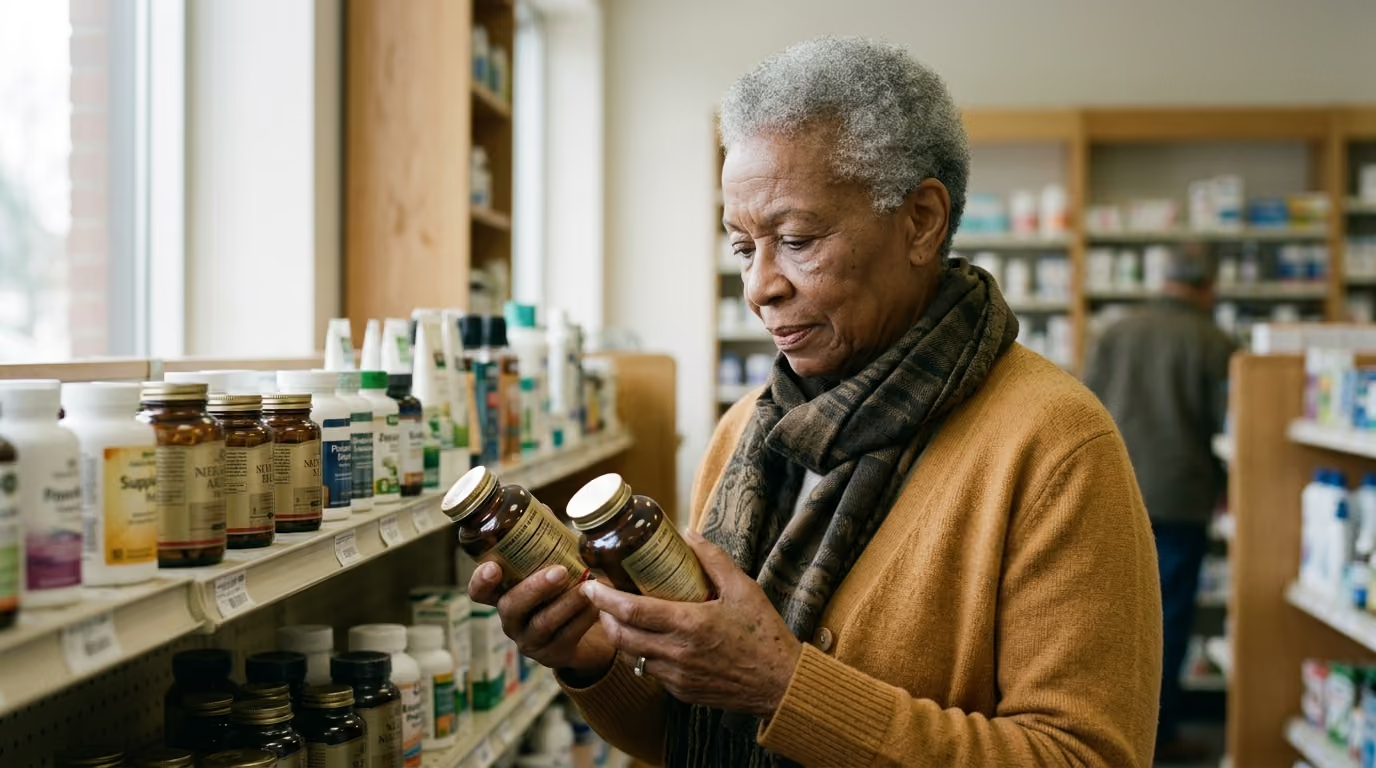

Dietary polyphenols promote healthy aging by improving endothelial function and cellular stress responses through complex gut metabolism and distinct biological mechanisms.





Polyphenols are a diverse family of naturally occurring phytochemicals characterized by one or more aromatic rings with attached hydroxyl groups. They are not a single nutrient, nor are they a universal longevity treatment. Instead, they represent thousands of distinct chemical structures found across plant foods, including berries, leafy vegetables, whole grains, nuts, tea, coffee, and spices.
Understanding the role of polyphenols in healthy aging requires navigating the gap between laboratory hypotheses and validated clinical outcomes. In cell cultures, polyphenols often show strong antioxidant, anti-inflammatory, and metabolic activities. In the human body, however, these molecules undergo complex digestion, extensive liver metabolism, and profound structural alteration by the gut microbiome.
This guide examines what polyphenols are, how the human body processes them, and which dietary patterns provide them. It also reviews the clinical trial evidence for popular polyphenol supplements and outlines the biological limits of current longevity research.
Polyphenols are secondary plant metabolites that defend flora against ultraviolet radiation, oxidative stress, and biological pathogens. When humans consume plant foods, they ingest these complex chemical mixtures. Estimating total polyphenol intake is challenging because food composition databases vary, and food preparation changes polyphenol retention. Researchers generally group polyphenols into four main chemical categories, alongside specialized groupings like tannins.
Flavonoids are the largest and most widely studied class of polyphenols, accounting for a significant portion of dietary plant compounds. Their basic chemical structure consists of a fifteen-carbon skeleton organized into two benzene rings linked through a heterocyclic pyran ring. Flavonoids are further divided into distinct subclasses based on the oxidation state and functional groups attached to the central ring.
Phenolic acids represent a substantial fraction of the polyphenols consumed in daily diets, especially from beverages and whole grains. They are chemically simpler than flavonoids, possessing a single phenolic ring with a carboxylic acid functional group. They fall into two main structural types:
Lignans are diphenolic compounds formed by the union of two phenylpropane units. They form structural components in plant cell walls and serve as precursors to human bioactive metabolites. Whole plant seeds are exceptionally rich sources of lignans.
Flaxseed represents the densest known dietary source of secoisolariciresinol diglucoside. Sesame seeds, whole rye, oats, barley, and various legumes also provide measurable lignan concentrations. When consumed, intestinal bacteria convert dietary plant lignans into enterolignans, specifically enterodiol and enterolactone.
Stilbenes are characterized by a 1,2-diphenylethylene core structure and are produced by plants in small quantities during times of stress or fungal challenge. The most widely known stilbene is resveratrol, found primarily in grape skins, peanuts, berries, and red wine. Piceatannol and pterostilbene are related stilbenes found in small amounts in blueberries and passion fruit.
Because stilbenes occur in low baseline amounts in standard diets, experimental studies often use concentrated extracts to achieve physiological exposures. The natural occurrence of resveratrol in wine has generated extensive public interest. However, typical dietary intakes of wine do not provide the high compound concentrations tested in animal life-extension studies.
Tannins are high-molecular-weight phenolic compounds capable of precipitating proteins and other nitrogenous compounds. They are responsible for the astringent mouthfeel of unripe fruit, red wine, dark chocolate, and strongly brewed tea.
A major point of confusion in nutrition science is assuming that the polyphenol content on a nutritional label equals the biological dose delivered to human tissues. The path from ingestion to cellular exposure is governed by the principles of bioavailability, biotransformation, and gut microbial ecology.
Polyphenols exist inside complex plant matrices, frequently bound to dietary fibers, cell wall polysaccharides, or proteins. Digestive enzymes in the saliva and stomach begin liberating these molecules, but many remain trapped until they reach the small and large intestines.
Cooking methods, mechanical processing, and the presence of dietary fats can alter how effectively polyphenols are released. For example, the phenolic acids in whole grains are often covalently cross-linked to insoluble hemicellulose. These bound forms pass through the upper gastrointestinal tract largely intact, requiring microbial fermentation downstream to become bioavailable.
The human small intestine can absorb certain free, low-molecular-weight polyphenol aglycones through passive diffusion or active transport mechanisms. However, most dietary polyphenols exist as glycosides bound to sugars. Enzymes like lactase-phlorizin hydrolase at the intestinal brush border, or cytosolic beta-glucosidases inside enterocytes, must cleave these sugars to enable uptake.
Once inside intestinal epithelial cells, polyphenols undergo rapid Phase II metabolic transformation. The body treats free polyphenols as xenobiotics, adding chemical groups to make them more water-soluble and easier to excrete.
Following this intestinal biotransformation, metabolites travel through the portal vein to the liver, where they undergo further Phase II processing. As a result, the compounds circulating in human blood are rarely the original parent compounds found in the food. Instead, circulating polyphenols are a mixture of glucuronidated, sulfated, and methylated conjugates.
Between 90% and 95% of total dietary polyphenols pass unabsorbed through the small intestine and enter the colon. Here, the dense microbial ecosystem performs complex biochemical transformations that human digestive enzymes cannot accomplish.
Intestinal bacteria utilize enzymes to carry out C-ring fission, dehydroxylation, demethylation, and decarboxylation. These reactions break large flavonoids, tannins, and lignans down into smaller phenolic and aromatic acids.
Because individual microbiomes differ, human metabolic responses to the exact same polyphenol meal are highly variable. Two people consuming identical amounts of anthocyanins or ellagitannins may generate completely different concentrations of circulating microbial metabolites.
Once absorbed, polyphenol metabolites typically have short half-lives in human circulation. Many conjugated metabolites are cleared by the kidneys and excreted in urine within 2 to 8 hours. Some undergo enterohepatic recirculation, being secreted via bile back into the duodenum before reabsorption.
Tissue penetration varies significantly across organs. Hydrophilic metabolites do not readily cross the blood-brain barrier, which limits direct central nervous system exposure. Measuring parent polyphenol concentrations in food does not accurately reflect the compound forms or concentrations that reach human target tissues.
In laboratory models, polyphenols trigger an array of biological signals. Researchers investigating cellular health and metabolism often test these compounds on isolated cells or animal tissues. However, laboratory mechanisms serve as hypotheses for human biology rather than definitive proof of anti-aging outcomes.
For decades, popular media characterized polyphenols simply as direct free radical scavengers. In a test tube, polyphenols readily donate electrons or hydrogen atoms to neutralize reactive oxygen species. However, inside living human tissues, this direct mechanism is biologically improbable.
Circulating concentrations of polyphenol metabolites in human plasma rarely exceed low micromolar or nanomolar ranges. By contrast, endogenous antioxidant molecules, such as glutathione, uric acid, and albumin, exist at millimolar concentrations. Direct chemical scavenging by polyphenols cannot compete quantitatively with these abundant internal defenses.
Modern geroscience views polyphenols primarily through the lens of cellular stress responses and hormesis. At physiological levels, polyphenols and their metabolites act as mild stressors that trigger protective intracellular signaling pathways.
One of the most reproducible physiological effects of specific polyphenols involves the vascular endothelium. Flavan-3-ol monomers, particularly epicatechin, can influence endothelial nitric oxide synthase activity.
In human vascular tissue, epicatechin and its circulating metabolites increase the bioavailability of nitric oxide. Nitric oxide promotes vascular smooth muscle relaxation, leading to arterial vasodilation and temporary improvements in blood flow. This pathway explains why cocoa flavanol consumption consistently improves flow-mediated dilation in human clinical trials.
The relationship between the gut microbiota and dietary polyphenols is bidirectional. While bacteria transform polyphenols into bioavailable metabolites, polyphenols also alter the gut environment.
Polyphenols can exert selective antimicrobial effects against pathogenic bacteria while promoting the proliferation of beneficial taxa, including Bifidobacterium, Lactobacillus, and Akkermansia muciniphila. Through this remodeling, polyphenols may support gut barrier integrity, enhance short-chain fatty acid production, and modulate systemic immune tone.
Laboratory experiments often expose isolated cell lines to unphysiologically high concentrations of parent aglycone compounds for extended durations. In living humans, target organs are exposed to low, fluctuating concentrations of Phase II and microbial metabolites. A mechanism observed in a petri dish using raw quercetin or resveratrol cannot be assumed to occur in human tissues after eating food.
Evaluating the impact of polyphenols on human aging requires distinguishing between observational associations and randomized controlled trials. Large population studies provide valuable lifestyle correlations, but they cannot isolate polyphenols from other dietary and environmental factors.
The primary prevention of cardiovascular disease trial (PREDIMED) was a multicenter, randomized controlled trial involving 7,447 older adults at high cardiovascular risk. Participants were assigned to a Mediterranean diet supplemented with extra-virgin olive oil, a Mediterranean diet supplemented with mixed nuts, or a low-fat control diet.
The trial demonstrated that participants assigned to the Mediterranean diet arms experienced a statistically significant reduction in major cardiovascular events compared to the control group. Because extra-virgin olive oil and nuts contain diverse phenolic compounds, researchers performed observational re-analyses of the trial cohort to evaluate polyphenol intake specifically.
In one analysis, researchers estimated baseline polyphenol consumption using food frequency questionnaires and food databases. Comparing the highest quintile of total polyphenol intake to the lowest, the analysis reported a 37% relative reduction in all-cause mortality, with a hazard ratio of 0.63 (95% confidence interval 0.41 to 0.97).
However, the statistical test for a linear trend across quintiles was not statistically significant (P for trend = 0.12). When evaluating specific polyphenol classes, significant associations with lower mortality were observed for stilbenes and lignans, but not for total flavonoids or phenolic acids.
This finding illustrates an essential distinction in longevity research and news. While the overarching Mediterranean dietary pattern was tested in a randomized design, the sub-analysis of polyphenol intake was observational. It cannot prove that polyphenols alone were the active agents driving the lower mortality. The benefits could stem from dietary fiber, monounsaturated fats, lower sodium, or unmeasured lifestyle factors.
Other large prospective observational cohorts, such as the Nurses' Health Study and the Health Professionals Follow-Up Study, have tracked flavonoid intake over decades. These studies consistently link higher intakes of anthocyanin-rich berries, flavanol-rich teas, and flavonol-rich vegetables to lower risks of coronary artery disease, ischemic stroke, and type 2 diabetes.
While these observational signals are consistent, they are vulnerable to healthy-user bias. Individuals who habitually consume high amounts of fresh berries, green leafy vegetables, and quality teas often exercise more, smoke less, possess higher socioeconomic status, and maintain healthier body weights. Statistical adjustments reduce these confounding factors, but they cannot eliminate them.
Because whole foods contain complex mixtures of polyphenols, the supplement industry often isolates and concentrates individual molecules into pills. Examining randomized controlled trials reveals where these supplements succeed, where they fail, and why they cannot simply replace a healthy diet.
Cocoa flavanols have been studied extensively for cardiovascular and neurological health. The Cocoa Supplement and Multivitamin Outcomes Study (COSMOS) was a large-scale, randomized, placebo-controlled trial testing a standardized cocoa extract providing 500 mg of total flavanols, including 80 mg of epicatechin, per day in older adults.
In dedicated ancillary studies evaluating cognitive aging, researchers measured changes in episodic memory, executive function, and global cognition over two to three years of daily supplementation.
The COSMOS findings highlight that high-potency cocoa flavanol capsules do not universally enhance brain function or prevent cognitive decline in well-nourished older adults.
Curcumin, a hydrophobic polyphenol extracted from the rhizome of Curcumin longa (turmeric), has been tested in numerous human clinical trials. Unformulated curcumin exhibits exceptionally low bioavailability, with rapid intestinal and hepatic clearance preventing significant systemic uptake.
To counter this, modern supplements pair curcumin with piperine or encapsulate it in phytosomes, liposomes, and nanoparticle emulsions. Systematic reviews and meta-analyses of randomized controlled trials indicate that bioavailable curcumin supplements can improve specific surrogate biomarkers compared to placebo.
While these intermediate biomarker shifts are clinically meaningful for metabolic management, they do not prove that curcumin extends human lifespan or prevents age-related cardiovascular events.
Resveratrol gained global prominence after early preclinical trials showed that high doses activated sirtuins, improved metabolic parameters in obese mice, and extended lifespan in yeast, nematodes, and fruit flies.
Translating these findings into humans has proved difficult. Resveratrol is rapidly metabolized by Phase II enzymes in the human gut and liver, yielding an in vivo plasma half-life of just 8 to 14 minutes for the parent molecule. Human clinical trials testing resveratrol supplements at doses ranging from 75 mg to several grams per day have yielded mixed results.
While some short-term trials show improvements in flow-mediated dilation or insulin sensitivity in adults with metabolic dysfunction, well-designed human trials have failed to show life extension, persistent vascular rejuvenation, or primary prevention of chronic disease. High doses frequently cause mild gastrointestinal distress, including diarrhea, nausea, and abdominal cramping.
Concentrating a single polyphenol into a capsule alters how the body interacts with the compound. In whole foods, polyphenols work alongside dietary fiber, vitamins, minerals, and other phytochemicals that slow absorption, enhance solubility, and modulate intestinal transit.
Taking an isolated, high-dose polyphenol supplement floods Phase II clearance pathways with a single molecular structure. This provides an unphysiologically high pulse of specific metabolites while missing the synergistic benefits of a diverse, whole-food diet.
The widespread assumption that dietary supplements are inherently safe because they derive from natural plants is contradicted by toxicological research. Concentrating bioactive polyphenols into high-potency extracts can introduce safety risks that do not occur with normal dietary intake.
Green tea consumed as a brewed beverage has a long history of safe use across global populations. However, concentrated green tea extract supplements, marketed for weight loss, antioxidant support, or cellular vitality, present documented safety concerns.
Green tea extracts are rich in epigallocatechin gallate (EGCG). When taken in large doses on an empty stomach, EGCG can induce mitochondrial stress and oxidative damage in human hepatocytes.
Brewed green tea delivers catechins slowly alongside water and food, which spreads out absorption and avoids the hepatotoxic thresholds observed with concentrated pills.
High concentrations of polyphenols can interact with common prescription medications by altering the activity of hepatic and intestinal enzymes.
While polyphenols act primarily as adaptive biological signaling molecules at nutritional doses, high concentrations can exhibit pro-oxidant behavior in the presence of transition metals like iron and copper.
In the presence of free cupric or ferric ions, high doses of isolated polyphenols can catalyze the generation of hydroxyl radicals and hydrogen peroxide in vitro. Although internal homeostatic systems typically sequester free metals, this pro-oxidant potential emphasizes why mega-dosing isolated polyphenol extracts is biologically distinct from eating plant foods.
Evaluating polyphenol research requires understanding the difference between intermediate surrogate biomarkers and hard clinical endpoints. A study showing a positive change in a blood test does not automatically mean an intervention improves long-term healthspan. For readers tracking their health via age, biomarkers, and diagnostics, standard laboratory markers provide context on physiological responses.
To support clear evaluation, researchers separate these surrogate biomarkers from meaningful clinical outcomes:
Translating a short-term improvement in an intermediate biomarker into an assumed reduction in hard disease endpoints is a frequent error in nutritional interpretation.
Clear communication in healthy-aging science requires establishing distinct boundaries around what the evidence does not demonstrate.
Current human clinical evidence does not show that taking polyphenol supplements can extend human lifespan, reverse biological aging, or repair cellular senescence. Most longevity claims for compounds like resveratrol, quercetin, and fisetin originate from in vitro cell models or short-lived model organisms like yeast, C. elegans, and rodents.
The biological effects observed in model organisms frequently involve genetic backgrounds, environmental controls, and milligram-per-kilogram doses that cannot be safely achieved in humans. Furthermore, observational associations between polyphenol intake and lower mortality in cohorts like PREDIMED reflect the cumulative benefits of whole dietary patterns, social environments, and lifestyle habits over decades. These benefits cannot be replicated simply by adding an isolated polyphenol extract to an otherwise poor diet.
Readers exploring longevity interventions and therapeutics should approach single-molecule longevity claims with caution, keeping the limitations of preclinical research in perspective.
Translating polyphenol research into daily habits means focusing on sustainable dietary diversity rather than searching for single superfoods or relying on high-dose supplements. Exploring longevity nutrition and supplements shows that eating a broad variety of whole plant foods delivers diverse polyphenol classes within an intact matrix of fiber and essential micronutrients.
Rather than concentrating on one specific berry or beverage, aim to consume plant foods across all major polyphenol categories:
For most healthy adults, getting polyphenols from whole foods is safer and more effective than taking high-dose extracts. Whole plant foods deliver thousands of complementary compounds alongside prebiotic fibers that nourish the microbiome and generate healthy downstream metabolites.
If choosing to take specific polyphenol supplements, focus on products with clinical safety and efficacy data, maintain moderate dosages, and avoid taking high-potency green tea extracts on an empty stomach. For more in-depth reviews on healthy aging, consult our broader collection of longevity science and healthy aging resources.
No. Whole fruits, vegetables, seeds, and whole grains deliver diverse polyphenol families within a supportive food matrix of fiber, vitamins, and minerals. Supplements deliver high doses of isolated molecules that can saturate Phase II clearance pathways, bypass beneficial gut fermentation, and carry safety risks like liver injury.
No. The concentrations of resveratrol tested in preclinical longevity studies would require drinking hundreds of liters of red wine daily, an intake that causes severe alcohol toxicity. Red wine contains only small amounts of resveratrol, and excessive alcohol consumption is a documented risk factor for cardiovascular disease, cognitive decline, and several cancers.
Brewed green tea provides catechins in moderate concentrations alongside water and food, which slows absorption and allows the liver to clear metabolites safely. Concentrated green tea extract capsules deliver large boluses of catechins, particularly EGCG. When taken on an empty stomach, these high doses can cause mitochondrial stress and acute toxicity in liver cells.
Cooking alters polyphenol composition, but it does not uniformly destroy them. Boiling can cause water-soluble polyphenols to leach into the cooking water, whereas steaming, light sauteing, or roasting can break down tough plant cell walls, making bound phenolic acids and flavonols easier to digest and absorb.
Stay current with research on aging biology, biomarkers, nutrition, therapeutics, peptides and longevity technology. AgeAmaze reports what the evidence shows, where uncertainty remains and which claims still need stronger data.


Follow AgeAmaze for careful reporting on what longevity science can show today and what still needs stronger evidence.
read the Blog