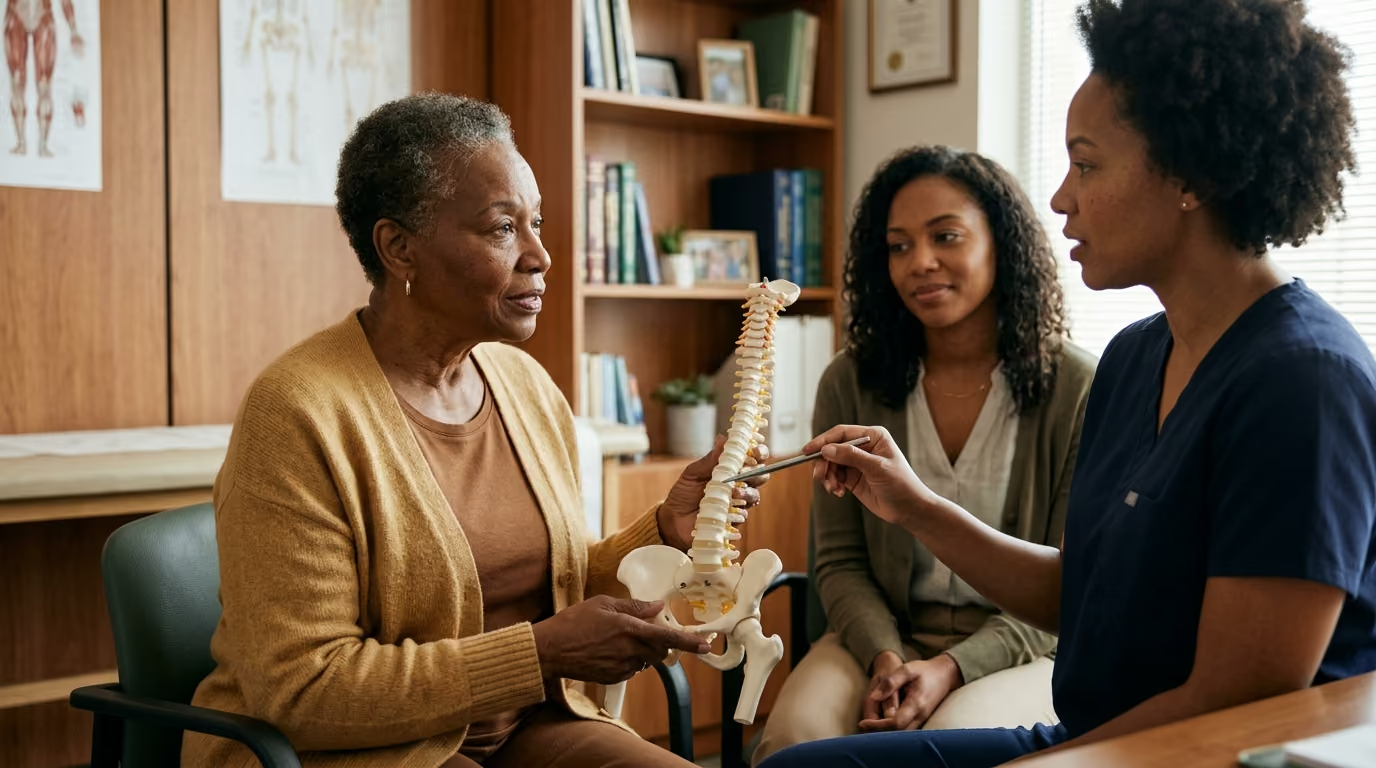

Conversations fading in crowded rooms often prompt older adults to explore how hearing aids and vision care protect cognitive function and mobility.





Many discussions of human longevity focus on complex molecular therapies, cellular reprogramming, or experimental pharmacology. In contrast, sensory organs are often viewed as simple mechanical interfaces that merely degrade with age. This perspective overlooks how deeply vision and hearing shape brain function, physical independence, and everyday communication. Treating sensory loss is one of the most accessible ways to support functional health, but the surrounding claims require careful examination.
Sensory decline is common among older adults, yet its relationship to systemic health is widely misunderstood. While restoring sensory input clearly improves daily functioning, popular media frequently claims that hearing aids or cataract surgeries directly prevent dementia. Understanding what the clinical evidence actually shows requires separating functional benefits from neuroprotective claims.
Addressing sensory health provides immediate value for communication, spatial navigation, and social participation. Evaluating interventions on these grounds prevents unrealistic expectations about reversing cognitive decline. This comprehensive guide analyzes the clinical trials, population risk models, screening guidelines, and technological options that define sensory care in older adults.
The clinical rationale for treating age-related vision and hearing loss begins with sensory restoration. When an individual receives corrective lenses or hearing amplification, the direct outcome is improved signal reception. This improved reception allows a person to understand speech in noisy rooms, read printed text, and navigate uneven walking surfaces. These functional gains directly support independence and overall quality of life.
A central finding across modern sensory research is that treating sensory impairment consistently improves immediate functional capacity. However, demonstrating functional improvement is not the same as proving that an intervention prevents long-term neurodegenerative diseases. Clinical trials that measure sensory performance evaluate whether a device makes sounds audible or visual details sharper. In contrast, dementia prevention trials must track long-term clinical diagnoses across large populations over many years.
The difference between these levels of evidence is vital for interpreting modern longevity science. Observational studies frequently observe that older adults with untreated hearing or vision impairment experience higher rates of cognitive decline. These statistical correlations provide a rationale for further research, but they do not establish direct cause and effect. An observed link can easily arise from shared underlying neurodegeneration or unmeasured socioeconomic factors.
Moving from observational correlation to a confirmed clinical intervention requires rigorous randomized controlled trials. When evaluating longevity interventions and therapeutics, researchers must distinguish between surrogate markers and validated clinical endpoints. A surrogate marker might be a subtle change in a computerized memory test score. A true clinical endpoint is the verified prevention or delay of diagnosed dementia.
Sensory care should be pursued primarily because it restores daily function, safety, and social connection. If future research confirms that sensory treatment also lowers dementia incidence, that outcome will be an added benefit. Conflating the immediate functional value of sensory care with guaranteed neuroprotection creates misleading health guidance.
The Aging and Cognitive Health Evaluation in Elders trial, known as ACHIEVE, provides the most rigorous randomized evidence to date regarding hearing care and cognitive decline. The trial enrolled 977 adults aged 70 to 84 who had untreated, mild-to-moderate hearing loss. Importantly, all participants were free of substantial cognitive impairment at the time of enrollment. Participants were randomly assigned to receive either a comprehensive hearing intervention or a health education control program.
The active hearing intervention included professional fitting of hearing aids, hearing assistive technologies, and individualized audiological counseling. The control group received an evidence-based health education program focused on chronic disease management. Researchers tracked both groups over a three-year period to assess changes in cognitive performance.
The primary endpoint of the trial was the three-year change in a global cognitive composite score derived from a comprehensive neurocognitive testing battery. In the primary analysis of the total combined trial population, the three-year change in global cognition did not differ significantly between the hearing intervention group and the control group. The between-group difference was 0.002 standard deviation units, with a 95 percent confidence interval from -0.077 to 0.081, yielding a non-significant p-value of 0.96.
This primary result demonstrates that the hearing intervention did not reduce three-year cognitive decline across the overall study cohort. For typical older adults with mild-to-moderate hearing loss and low baseline cognitive risk, hearing aids did not alter global cognitive trajectory over three years. This controlled human trial provides high-quality evidence that universal hearing aid use does not automatically slow cognitive aging in the general population.
A prespecified sensitivity analysis, however, revealed important nuance within the trial data. The study population had been recruited from two distinct sources: the ongoing Atherosclerosis Risk in Communities study cohort and a newly recruited healthy volunteer cohort. The participants from the existing community study had higher baseline risks for cognitive decline, older average ages, and more cardiovascular risk factors.
Within this higher-risk subgroup, the hearing intervention was associated with a significant reduction in cognitive decline over three years compared to the control intervention. Conversely, no cognitive effect was observed in the healthier, lower-risk volunteer cohort. This subgroup finding suggests that hearing care may offer cognitive preservation benefits specifically for individuals who are already on a trajectory of elevated cognitive risk.
While these subgroup findings are promising, they must be interpreted with scientific caution. A secondary subgroup signal does not override a null primary outcome across the entire study population. The ACHIEVE trial tested cognitive score changes over three years, not a definitive reduction in diagnosed dementia cases. These findings, widely reported in longevity research updates, confirm that hearing care is valuable for communication while tempering claims of broad cognitive protection.
Researchers have proposed several biological and psychosocial mechanisms to explain why sensory loss correlates with cognitive decline. These mechanistic hypotheses help explain why the brain might suffer when sensory inputs degrade. However, a proposed biological mechanism is an explanatory hypothesis, not proof of clinical benefit.
The first major model is the cognitive load hypothesis. When hearing or vision becomes impaired, the brain must allocate extra cognitive resources simply to decode distorted sensory signals. Processing degraded auditory input requires increased listening effort, which draws mental resources away from working memory and executive tasks. Over long periods, this chronic compensatory effort may reduce the brain's capacity for other complex cognitive operations.
The second mechanism involves structural brain changes driven by sensory deprivation. When the auditory or visual cortex receives less input from peripheral receptors, neuroplastic changes occur. Neuroimaging studies demonstrate that prolonged sensory deprivation correlates with accelerated volume loss in temporal lobe regions responsible for speech and memory. Without regular sensory stimulation, neural circuits may undergo synaptic pruning and progressive atrophy.
The third mechanism operates through psychosocial pathways. Untreated sensory impairment often makes communication difficult and exhausting in group environments. Older adults with hearing or vision loss frequently withdraw from social gatherings, hobbies, and physical activities. Social isolation and loneliness are well-established risk factors for accelerated cognitive decline and depressive disorders.
The fourth model is the shared common-cause hypothesis. Rather than sensory loss causing brain changes, a shared underlying pathological process may damage both peripheral sensory organs and central neural pathways simultaneously. Microvascular disease, chronic systemic inflammation, oxidative stress, and mitochondrial dysfunction can damage the cochlea, retina, and cerebral cortex concurrently. In this scenario, sensory loss serves as a peripheral indicator of systemic neurodegeneration rather than an independent cause of dementia.
These biological mechanisms are grounded in the biology of aging and longevity science. While each pathway is biologically plausible, none proves that restoring sensory inputs will prevent underlying neurodegenerative diseases like Alzheimer's. Correcting sensory loss eliminates unnecessary cognitive load and social withdrawal, but it cannot reverse preexisting neural damage.
Vision loss in older adults encompasses several distinct conditions, ranging from simple refractive errors to complex ocular diseases. Common age-related vision changes include cataracts, age-related macular degeneration, glaucoma, and diabetic retinopathy. Restoring visual acuity directly affects physical independence, reading ability, and daily safety.
Cataracts represent one of the most treatable causes of visual impairment in aging populations. A cataract forms when the natural lens of the eye becomes cloudy due to protein aggregation, leading to blurred vision and glare. Modern cataract surgery replaces the clouded natural lens with a clear artificial intraocular lens through an outpatient procedure.
Beyond improving visual clarity, cataract surgery significantly influences physical mobility and fall prevention. A landmark randomized controlled trial evaluated the effects of expedited first-eye cataract surgery in older women aged 70 and older. The trial compared women who received expedited surgery within four weeks against those placed on a standard twelve-month waiting list.
The trial found a substantial reduction in fall rates among women who received expedited surgery. The rate ratio for falling in the operated group was 0.66, with a 95 percent confidence interval of 0.45 to 0.96 and a p-value of 0.03. Participants who underwent prompt surgery experienced approximately 34 percent fewer falls during the follow-up period compared to those waiting for surgery.
An accompanying economic and health status evaluation confirmed these functional benefits. The operated group experienced an average of 0.934 falls per person, compared to 1.390 falls per person in the control group. This represents an absolute reduction of 0.456 falls per patient over the study duration. Improved contrast sensitivity and depth perception allowed participants to better identify walking hazards and environmental obstacles.
This cataract research provides an ideal example of assessing clinical interventions against functional physical endpoints. The trial demonstrated a clear, statistically significant reduction in falls resulting from a targeted vision procedure. However, these results apply specifically to older women undergoing first-eye cataract extraction. They should not be generalized to mean that any vision intervention will prevent falls or improve cognitive scores across all older adults.
In discussions of dementia risk reduction, epidemiological modeling is frequently cited alongside clinical trial results. The 2024 report of the Lancet Standing Commission on Dementia Prevention, Intervention, and Care provides an updated global framework for modifiable risk factors. The report added untreated vision loss to its existing list of dementia risk factors, which already included midlife hearing loss.
The 2024 Lancet Commission calculated that approximately 45 percent of dementia cases worldwide might theoretically be prevented or delayed. This estimate assumes the complete elimination of 14 modifiable risk factors across the human life course. These factors include sensory impairments, hypertension, smoking, obesity, depression, physical inactivity, diabetes, excessive alcohol consumption, traumatic brain injury, air pollution, social isolation, and lower educational attainment.
To interpret these findings accurately, readers must understand what a Population Attributable Fraction represents. A Population Attributable Fraction is a theoretical mathematical calculation. It estimates the proportion of disease incidence in a population that would be eliminated if a specific risk factor were completely removed. This calculation relies on observational relative risk estimates and assumes a direct, unconfounded causal relationship.
A population-level risk framework is fundamentally different from a demonstrated clinical intervention effect. When the Lancet Commission reports that sensory loss accounts for a portion of population dementia risk, it does not mean that giving an individual a hearing aid eliminates their personal risk. Observational models aggregate broad population patterns, but they cannot account for individual biological differences or complex disease mechanisms.
Public communication often confuses these two concepts. Headlines claiming that treating hearing or vision loss can prevent 45 percent of dementia cases misrepresent the underlying research. The 45 percent figure applies to all 14 risk factors combined across an entire lifetime, not sensory care alone. Treating sensory loss remains essential for health, but population models must not be cited as proof of individual disease prevention.
Clinical practice guidelines distinguish between population-wide screening of asymptomatic individuals and diagnostic assessment of people with symptoms. Screening involves applying medical tests to people who have not noticed or reported any functional problems. Diagnostic assessment occurs when a patient or clinician identifies a specific symptom or functional complaint that requires evaluation.
The United States Preventive Services Task Force, known as the USPSTF, evaluates preventive health services for primary care populations. For hearing loss, the USPSTF concludes that current evidence is insufficient to assess the balance of benefits and harms of routine screening in asymptomatic adults aged 50 and older. The task force assigned this recommendation an "I" statement, reflecting a lack of adequate trial evidence.
Similarly, the USPSTF issued an "I" statement regarding screening for impaired visual acuity in asymptomatic adults aged 65 and older. The task force determined that available randomized trials have not demonstrated whether routine visual screening in asymptomatic older adults leads to improved vision, better daily function, or fewer accidents compared to standard care.
A common misconception is that an "I" statement represents a recommendation against screening or testing. In reality, an "I" statement simply indicates that current evidence is inconclusive. The available studies have not proved whether routine testing of people without symptoms provides a clear medical benefit that outweighs potential harms, such as unnecessary referrals or overdiagnosis.
Crucially, the USPSTF recommendations apply solely to individuals who report no sensory symptoms. These statements do not apply to older adults who notice difficulty hearing conversations, struggle to read signs, or experience changes in vision. When a person reports sensory difficulty, clinicians should immediately initiate formal diagnostic testing.
A symptom-led pathway ensures that older adults receive timely evaluations whenever sensory challenges emerge. Recognizing communication problems in family settings or noticing blurred vision should always prompt professional medical care. Understanding the boundary of screening guidelines prevents patients from delaying necessary sensory treatments.
When hearing loss is diagnosed, selecting the right intervention depends on the type, severity, and configuration of the impairment. Age-related hearing loss, known clinically as presbycusis, is typically a progressive, symmetrical sensorineural hearing loss that affects higher audio frequencies first. Different technological options address varying levels of hearing impairment.
Over-the-counter hearing aids represent a newer regulatory category established by the Food and Drug Administration. These devices are designed specifically for adults aged 18 and older with perceived mild-to-moderate hearing loss. Consumers can purchase over-the-counter hearing aids directly online or in retail stores without visiting an audiologist or obtaining a medical prescription.
Over-the-counter devices use digital signal processing to amplify specific sound frequencies, allowing users to customize settings through smartphone applications. While these devices increase access and lower financial barriers, they are not appropriate for everyone. Individuals with severe hearing loss, sudden hearing drops, unilateral loss, or ear pain require comprehensive evaluation by a medical specialist.
Prescription hearing aids remain the standard of care for complex, asymmetrical, or severe hearing loss. These devices are fitted and programmed by licensed audiologists based on precise diagnostic audiograms. Professional fitting includes real-ear measurement verification, which ensures that sound amplification matches the unique acoustic geometry of the patient's ear canal.
For individuals with severe-to-profound sensorineural hearing loss who receive minimal benefit from standard hearing aids, cochlear implants offer an effective solution. A cochlear implant is an electronically fitted device comprising an external sound processor and a surgically implanted internal receiver with an electrode array. The electrode array bypasses damaged hair cells in the cochlea to stimulate the auditory nerve directly, providing a clear sense of sound.
Assistive listening devices provide vital support alongside personal hearing instruments. Hearing-loop systems, which utilize magnetic telecoil technology, transmit audio signals directly to compatible hearing aids in auditoriums, theaters, and places of worship. Amplified telephones, specialized alert systems, and smartphone captioning applications further enhance communication access in challenging listening environments.
Rigorous longevity science requires acknowledging the boundaries of current evidence. While the functional benefits of hearing and vision care are indisputable, several widespread claims exceed what current scientific research can support. Understanding these limitations protects individuals from misleading commercial and clinical assertions.
First, current clinical trials do not prove that hearing aids or vision interventions prevent dementia. The primary analysis of the ACHIEVE trial was statistically null across its full study cohort. Although subgroup analyses suggest possible benefits for individuals at elevated cognitive risk, these exploratory findings require independent replication in dedicated clinical trials before definitive neuroprotective claims can be made.
Second, surrogate cognitive markers must not be confused with clinical disease endpoints. Showing that an intervention changes a computerized processing speed score by a fraction of a standard deviation does not prove that a patient will avoid Alzheimer's disease. Clinical trials must measure validated diagnostic endpoints, such as formal dementia incidence and functional daily living scores, over extended multi-year follow-up periods.
Third, observational associations should never be presented as proof of treatment efficacy. Observing that individuals with vision loss experience higher rates of cognitive decline in epidemiological registries does not prove that eye drops or glasses will alter their cognitive trajectory. Observational studies cannot fully control for unmeasured health behaviors, socioeconomic disparities, or shared neurodegenerative processes.
Fourth, clinical trial results cannot be generalized beyond their specific study populations. The ACHIEVE trial evaluated adults aged 70 to 84 with untreated hearing loss who were free of major cognitive impairment. Similarly, the landmark cataract trial evaluated older women undergoing first-eye surgery. These specific findings cannot be generalized to younger populations, different eye conditions, or dissimilar clinical settings without direct validation.
Readers can explore additional analysis in our evidence-based healthy aging resources to better understand how clinical trial designs shape longevity recommendations. Evaluating sensory care on its verified functional benefits ensures that older adults receive appropriate, evidence-guided medical support without falling victim to exaggerated marketing claims.
Navigating sensory health literature requires familiarity with specific audiological, ophthalmological, and methodological terms. The following definitions clarify key concepts used throughout clinical trials and guideline statements:
Treating age-related hearing and vision loss is an essential component of functional healthy aging that should be pursued for its proven communication and mobility benefits rather than unproven promises of dementia prevention.
Stay current with research on aging biology, biomarkers, nutrition, therapeutics, peptides and longevity technology. AgeAmaze reports what the evidence shows, where uncertainty remains and which claims still need stronger data.


Follow AgeAmaze for careful reporting on what longevity science can show today and what still needs stronger evidence.
read the Blog