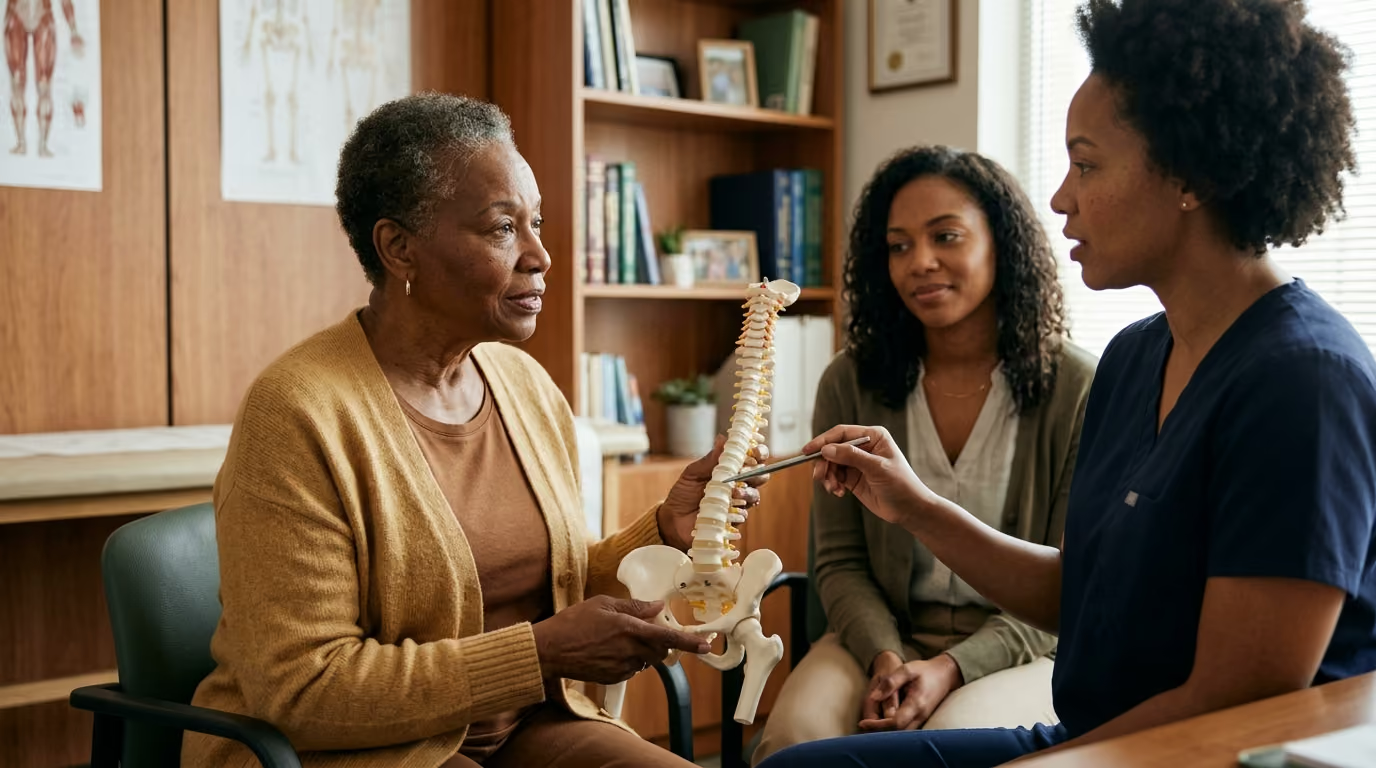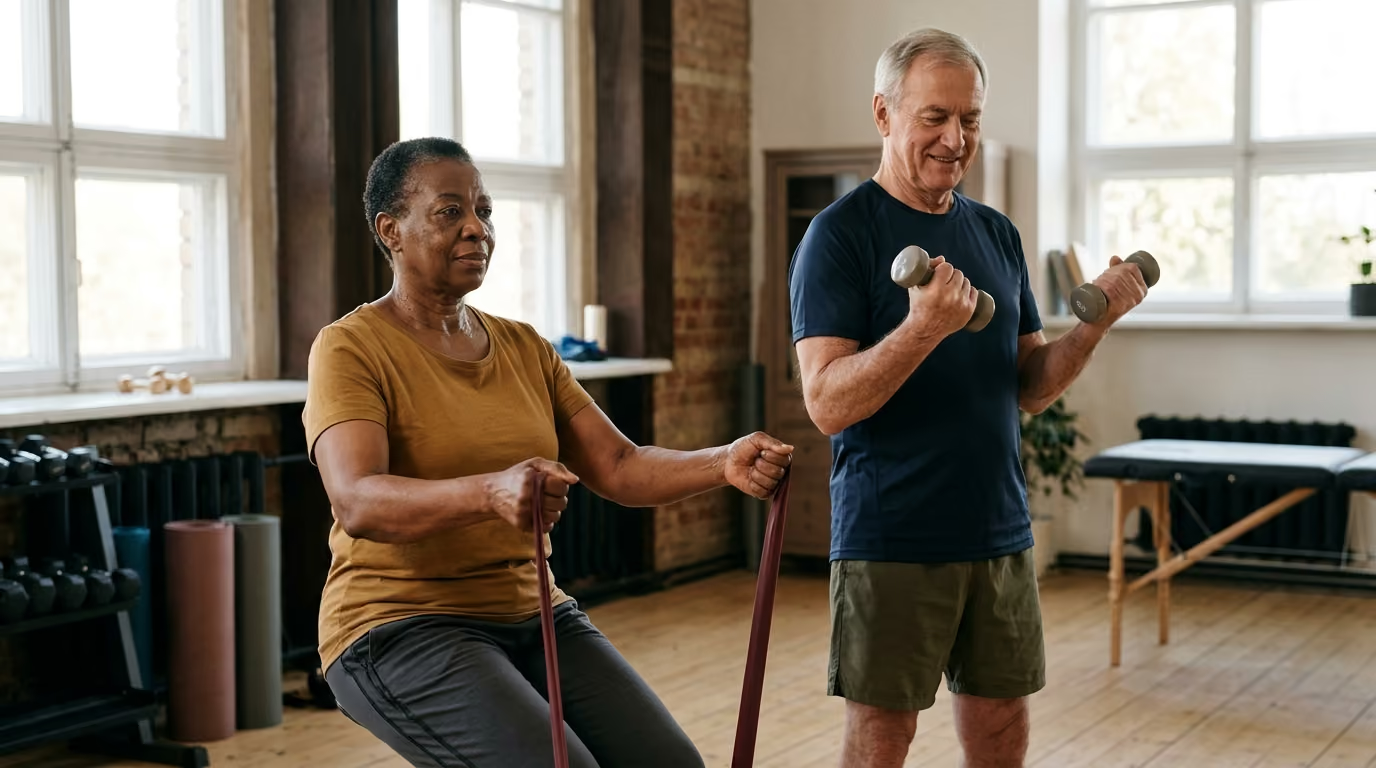

Two or more days of weekly strength training alongside balance work enhances muscle protein synthesis and reduces fall risk in older adults.





Many adults search online for the exact exercise routine needed to slow aging, prevent physical frailty, or protect against cognitive decline. The search results often present conflicting advice. Some sources claim that high-intensity workouts are the only way to preserve youth, while others suggest that daily walking is completely sufficient.
This guide provides a research-based breakdown of exercise as a geroscience intervention. It examines what controlled trials demonstrate regarding aerobic training, resistance exercise, balance practice, and high-intensity intervals. It clarifies the biological mechanisms of muscular and metabolic adaptation. It also establishes clear boundaries around what exercise can and cannot accomplish for human longevity.
Exercise is primarily a health-span intervention. It preserves physical capacity, muscular strength, functional mobility, and balance, while reducing risks such as falls and metabolic dysfunction. Health span refers to the period of life spent free from major chronic disease and disabling physical impairment. Lifespan refers strictly to the total number of years lived.
Epidemiological studies consistently show that higher levels of habitual
physical activity associate with lower rates of premature mortality. However, exercise has not been tested in formal human clinical trials designed to prove an extension of maximum biological lifespan. Conducting a randomized controlled trial to measure lifespan in humans would require tracking participants across multiple decades with near-perfect compliance. Because of these methodological constraints, available clinical trials focus on functional endpoints, biomarkers, and incident chronic diseases.
The scientific consensus views exercise as a way to maintain biological function and lower the burden of age-related disease. It is not an intervention that halts every aging process or guarantees an extended life. Understanding this distinction prevents the misinterpretation of functional gains as definitive proof of extended biological longevity.
Within longevity research, scientists classify exercise under the umbrella of geroscience interventions. A geroscience intervention targets basic aging biology to delay or mitigate multiple age-associated diseases simultaneously. Exercise influences several bodily systems at once, but its demonstrated benefits in human trials remain concentrated in physical performance, metabolic control, and functional independence.
Readers can learn more about how physical protocols fit into broader geroscience paradigms by reviewing our comprehensive index of longevity interventions and therapeutics.
The World Health Organization provides evidence-based physical activity guidelines for older adults. The core recommendation specifies 150 to 300 minutes of moderate-intensity aerobic physical activity per week, or 75 to 150 minutes of vigorous-intensity aerobic physical activity, or an equivalent combination of both.
The guidelines also include specific recommendations for non-aerobic modalities:
These guidelines function as complementary targets rather than interchangeable options. Completing 300 minutes of walking does not fulfill the physiological requirement for muscular overload provided by resistance training. Similarly, performing heavy resistance training twice a week does not automatically provide the sustained cardiovascular stimuli needed to optimize aerobic capacity.
A critical review of older-adult exercise prescriptions indicates that aerobic training alone is inadequate as a single modality for fall prevention. It does not provide sufficient mechanical or postural challenges to improve balance or correct neuromuscular deficits. A balanced routine requires a multimodal approach where aerobic conditioning, progressive resistance, and balance tasks operate alongside one another.
For previously sedentary adults, these targets represent long-term goals rather than mandatory starting baselines. The World Health Organization emphasizes that doing some physical activity is substantially better than doing none. Inactive individuals achieve measurable metabolic improvements by starting with small durations of light movement and gradually increasing frequency, intensity, and duration over time.
Skeletal muscle mass and neuromuscular function naturally decline with advancing age, a process known as sarcopenia. Resistance training provides the primary mechanical stimulus required to counteract this muscle loss and stimulate muscle protein synthesis.
Resistance exercise applies mechanical tension to muscle fibers. This tension stimulates the intracellular pathways that govern muscle protein synthesis. Research shows that older adults, including individuals aged 76 and older, retain the ability to acutely increase muscle protein synthesis following a single bout of resistance exercise.
With consistent training over weeks and months, repeated increases in protein synthesis contribute to measurable muscle hypertrophy and strength gains. This adaptation occurs even in frail older adults living in residential care settings. The neuromuscular system adapts through improved motor unit recruitment, higher firing rates, and structural remodeling of muscle fibers.
The capacity for muscular adaptation remains intact throughout life, but the rate and magnitude of adaptation can differ between younger and older adults. High-intensity and high-volume training protocols induce greater knee-extensor myofiber hypertrophy in younger cohorts compared to older cohorts. Older muscle tissue often displays a blunted anabolic sensitivity to mechanical loading and dietary amino acids.
This reduced sensitivity does not mean older adults cannot build muscle. It simply indicates that older individuals may require consistent progression and adequate recovery to achieve comparable relative gains. Resistance training remains a potent intervention for improving functional mobility, increasing force output, and supporting joint integrity across all stages of older adulthood.
A standard resistance training program for healthy older adults targets all major muscle groups twice weekly. A conservative starting framework begins with one to two sets of 10 to 15 repetitions per exercise at a moderate level of perceived exertion. As the individual adapts, resistance can increase gradually while keeping movement patterns controlled and pain-free.
To understand the underlying cellular changes that govern muscular aging, explore our detailed resource covering cellular and metabolic longevity science.
Falls represent a leading cause of injury, institutionalization, and functional decline among older populations. The evidence supporting structured balance and functional exercise for fall prevention is among the highest-certainty data in exercise science.
A comprehensive Cochrane systematic review evaluated balance and functional exercise interventions in community-dwelling older adults across 39 studies involving 7,920 participants. The analysis found that balance and functional exercise reduced the rate of falls by 24% compared to control groups (rate ratio 0.76, 95% confidence interval 0.70 to 0.81). This outcome carried a high-certainty evidence rating.
Broader systematic reviews examining long-term programs confirm these protective effects. A meta-analysis of 46 randomized controlled trials with 22,709 participants examined exercise interventions over 12-month periods. In that analysis:
These figures demonstrate that long-term exercise routines safely reduce both the absolute risk of falling and the severity of injuries when falls occur.
Effective fall prevention requires task-specific training. Balance is a complex motor skill that relies on the integration of sensory inputs from the visual, vestibular, and somatosensory systems, paired with rapid neuromuscular corrective actions.
Standard walking does not sufficiently challenge dynamic stability or lateral postural control. Effective balance regimens incorporate specific movement patterns:
A critical insight from trials in aged-care and community settings is that the protective benefits of balance training do not persist indefinitely once a program stops. Following the cessation of an exercise intervention, postural control and fall rates gradually return toward baseline levels.
Balance training should not be viewed as a short-term therapeutic course that confers permanent immunity against falls. It functions as an ongoing physical practice that requires regular maintenance throughout older adulthood.
Cardiorespiratory fitness declines with age due to decreases in maximum heart rate, stroke volume, capillary density, and mitochondrial enzyme activity. Sustained aerobic exercise stimulates cardiovascular and metabolic adaptations that mitigate these declines.
Regular aerobic activity improves insulin sensitivity, assists with blood pressure regulation, and enhances vascular endothelial function. The World Health Organization identifies physical activity as a foundational intervention for preventing noncommunicable diseases and managing hypertension and type 2 diabetes.
Aerobic movement increases the translocation of glucose transporter type 4 (GLUT4) proteins to the cell membranes of skeletal muscle. This process allows muscle cells to clear glucose from the bloodstream independently of insulin action during and immediately after exercise. Over time, repeated aerobic sessions lead to improvements in resting glycemic markers and reductions in systemic vascular resistance.
Epidemiological cohorts frequently report strong observational associations between high cardiorespiratory fitness and reduced all-cause mortality. Danish evidence assessments identify high-certainty evidence linking regular activity to lower overall mortality and lower cardiometabolic disease risk across populations.
However, clinical trials reveal important nuances. A large systematic review of randomized trials comprising approximately 50,000 participants noted that exercise interventions alone did not consistently demonstrate statistically significant reductions in all-cause mortality or incident cardiovascular events within the limited timeframes of clinical trials. The review confirmed that exercise effectively prevented type 2 diabetes when combined with dietary interventions.
This divergence between observational studies and intervention trials illustrates a key principle of evidence literacy. Observational studies track self-selected lifestyle patterns across decades, capturing cumulative lifetime exposures. Controlled trials test structured interventions over weeks or months, where statistical power, participant adherence, and study duration limit the ability to detect rare mortality events.
Researchers and clinicians should avoid presenting a reduction in all-cause mortality as a guaranteed outcome of any specific, short-term exercise routine.
Aerobic exercise also associates with preservation of brain structure and cognitive performance. A systematic review and meta-analysis of 104 studies and 341,471 participants observed a weak positive association between baseline physical activity and later global cognitive performance, episodic memory, and verbal fluency.
Intervention trials report small-to-moderate improvements in specific cognitive domains, particularly executive function, attention, and processing speed. However, trial evidence regarding the direct prevention of clinical dementia remains mixed. Regular aerobic activity supports overall brain health and mental well-being, but it should not be described as a guaranteed preventative measure against neurodegenerative disease.
For more on how scientific research evaluates biological markers and cognitive aging, consult our library on the biology of aging and longevity science.
High-intensity interval training involves alternating short bursts of high-effort exercise with periods of lower-intensity recovery. It has gained widespread interest due to its time efficiency and potent cardiorespiratory stimuli.
In healthy older adults, interval protocols on stationary cycling ergometers produce robust improvements in peak oxygen uptake, vascular compliance, and mitochondrial respiratory capacity. Cycling ergometers offer a safe modality because they remove balance constraints and minimize the risk of falling during high-effort intervals.
Research confirms that interval cycling is generally well tolerated when preceded by appropriate screening and warm-up periods. It provides an efficient method for improving cardiovascular conditioning in older adults who possess adequate baseline joint mobility.
Despite its cardiovascular benefits, high-intensity interval training is not an effective stand-alone intervention for fall prevention. A systematic review evaluating interval training in older populations concluded that evidence is insufficient to recommend intervals alone for reducing fall risk.
Interval training does not typically provide the multidirectional stepping, static balance challenges, or functional postural adjustments necessary to improve stability. The review concluded that interval workouts should be viewed as an optional cardiovascular supplement rather than a replacement for structured balance and strength training.
Studies examining acute physiological responses note that older adults can experience temporary postural instability immediately following their initial high-intensity exercise sessions. Intense exertion induces central and peripheral neuromuscular fatigue, which temporarily impairs balance reflexes.
This acute fatigue highlights the necessity of introducing interval work cautiously. Clinicians and trainers recommend ensuring that recovery intervals are sufficiently long, using stable exercise equipment, and separating intense interval sessions from complex balance drills.
Geroscience research evaluates how behavioral, pharmacological, and dietary interventions interact with fundamental biological mechanisms of aging. Scientists often organize these mechanisms into nine primary biological hallmarks:
Exercise exerts positive effects across several of these cellular pathways. Muscle contraction alters cellular energy ratios, activating metabolic regulators such as AMP-activated protein kinase and peroxisome proliferator-activated receptor gamma coactivator 1-alpha. These signaling events promote mitochondrial biogenesis, enhance cellular quality control, and improve nutrient handling in muscle and adipose tissue.
Exercise also reduces circulating levels of pro-inflammatory cytokines, supporting healthier intercellular communication. However, scientific caution is essential when interpreting these molecular findings.
Current evidence does not demonstrate that exercise reverses all nine biological hallmarks in human tissue. Furthermore, showing that exercise alters a surrogate cellular marker, such as telomere length or an epigenetic methylation pattern, does not constitute clinical proof that human lifespan has been extended.
Proposed cellular mechanisms explain how exercise supports physiological resilience, but they should not be conflated with verified clinical endpoints. The definitive benefits of exercise remain firmly rooted in measurable physical performance, metabolic stability, and functional independence.
Readers interested in the broader context of clinical metrics can explore our dedicated section on age, biomarkers, and diagnostics.
Interpreting the scientific literature on exercise requires recognizing the methodological limitations inherent in human aging research.
The primary challenge in long-term exercise trials is participant adherence. While controlled laboratory studies achieve high compliance over 8 to 12 weeks, real-world compliance declines significantly across multi-year studies.
When participants reduce their training volume or discontinue programs, physiological adaptations diminish. This behavioral decay complicates long-term intention-to-treat analyses, often diluting the measurable differences between intervention and control groups.
Older populations exhibit broad diversity in physical baseline capacity. A chronological 75-year-old may be a master athlete with high cardiovascular capacity, while another may have advanced sarcopenia, osteoarthritis, and autonomic dysfunction.
Exercise trials frequently recruit relatively healthy, independent older adults to minimize medical risks during testing. Consequently, findings from these cohorts cannot always be generalized to frail individuals or those managing complex chronic conditions.
Many exercise studies measure surrogate endpoints, such as changes in maximum oxygen uptake, resting blood pressure, or circulating inflammatory proteins. While improvements in these markers are physiologically beneficial, they do not guarantee fewer fractures, hospitalizations, or extended survival for every individual.
Understanding the boundary between surrogate biomarker shifts and confirmed clinical outcomes is central to evaluating longevity claims with appropriate scientific rigor.
To maintain scientific objectivity, it is critical to clarify what the current literature does not support:
Developing a safe and sustainable exercise program requires individualizing exercise selection, managing progressive overload, and applying appropriate medical screening.
Physical activity is safe for the vast majority of older adults. The World Health Organization recommends that previously inactive individuals begin with small amounts of movement and progress gradually, matching effort to their baseline functional ability.
Clinical exercise guidance provides a standard framework for pre-participation screening:
To achieve broad physical coverage and ensure long-term sustainability, individuals can structure their training progression into four practical stages.
The primary goal is breaking up prolonged sedentary behavior. Individuals focus on accumulating light movement throughout the day, such as brief walking bouts and gentle household tasks.
Once daily light movement is established, the individual introduces all core modalities: aerobic walking, basic resistance movements using body weight or resistance bands, and supported balance drills.
In this stage, the individual systematically increases training parameters. This involves increasing weekly aerobic duration toward the 150-minute target, adding resistance to strength exercises, and advancing balance drills to narrower bases of support.
The objective is sustaining the habit indefinitely. Consistency is maintained through structured routines, community exercise classes, or home-based programs that fit personal preferences.
For a broader collection of evidence-led guides on physical and physiological interventions, explore our healthy aging resources.
Exercise trials utilize a variety of physical and biological markers to track adaptation. Understanding what these biomarkers represent helps clarify study results.
Peak oxygen uptake measures the maximum volume of oxygen the cardiovascular and respiratory systems can deliver to working muscles during intense exercise. It is a validated marker of cardiorespiratory fitness and strongly associates with functional capacity in older adults.
This histological marker measures the physical size of individual skeletal muscle fibers obtained through tissue biopsies. It provides direct evidence of muscular hypertrophy following resistance training protocols.
HbA1c reflects average blood glucose concentrations over the preceding two to three months. It serves as a validated clinical biomarker for monitoring metabolic health and insulin sensitivity.
Gait speed measures the time required to walk a standard distance at a normal or rapid pace. In geriatric medicine, comfortable gait speed functions as a validated functional biomarker that correlates with future fall risk, disability, and hospitalization.
Building an effective exercise program does not require extreme protocols. It requires a balanced, sustainable routine that systematically addresses strength, endurance, and postural stability.
Use this checklist to structure an exercise routine this week:
Stay current with research on aging biology, biomarkers, nutrition, therapeutics, peptides and longevity technology. AgeAmaze reports what the evidence shows, where uncertainty remains and which claims still need stronger data.


Follow AgeAmaze for careful reporting on what longevity science can show today and what still needs stronger evidence.
read the Blog