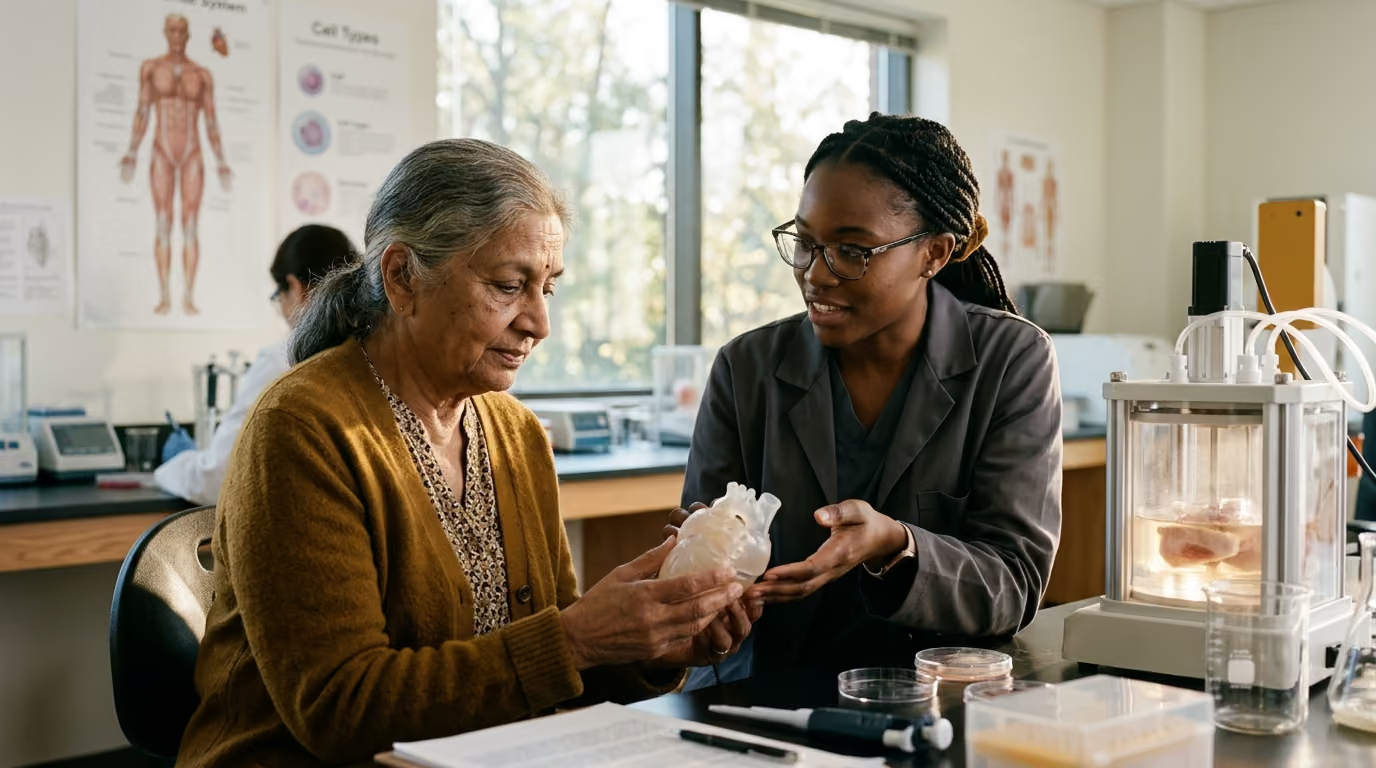

Navigating vital organ failure requires distinguishing between localized tissue replacement solutions and whole-body rejuvenation strategies designed to promote healthy aging.





Replacing a failing heart, kidney, or patch of skin does not make the rest of the body biologically younger. A fresh organ can save a life, yet it leaves the recipient's underlying cellular aging unchanged. Understanding the difference between local organ rescue and systemic rejuvenation is critical for evaluating modern longevity science.
When an organ fails, it creates a fatal bottleneck. If medicine can repair or replace that specific organ, a person may gain decades of active life. However, treating organ failure differs fundamentally from slowing down the biological mechanisms of aging.
Investigating these technologies requires looking past futuristic promises. We must examine the biological constraints, engineering realities, and clinical evidence defining tissue replacement today. You can read more about these emerging frameworks across our longevity science and healthy aging resources.
To understand where regenerative medicine fits into the future of longevity, we must categorize medical interventions by their true scope. Medical goals generally fall into three distinct levels of biological ambition:
Structural repair focuses on fixing a localized defect within an existing tissue. Examples include stitching a torn meniscus, applying a cellular skin graft over a burn, or prompting bone regrowth in a non-union fracture. The surrounding organ remains intact, and the intervention simply helps the native tissue restore its original architecture.
Organ replacement substitutes an entire failing biological system with a functional counterpart. This encompasses conventional human donor transplantation, genetically modified animal organs, and lab-grown organs. The intervention restores a critical physiological function, such as blood filtration or cardiac output, when native tissue is damaged beyond repair.
Systemic rejuvenation aims to alter the molecular and cellular drivers of aging across multiple organ systems simultaneously. This involves modifying fundamental aging processes across the whole body, such as cellular senescence, stem cell exhaustion, and epigenetic degradation.
Replacing an organ achieves structural replacement, not systemic rejuvenation. A successful kidney transplant restores waste filtration, normalizes fluid balance, and eliminates the need for dialysis. These changes provide substantial healthspan benefits. However, the transplant does not clear senescent cells in the brain, improve elasticity in distant blood vessels, or restore youthful gene expression in skeletal muscle.
Healthspan must also be understood through functional capacity rather than cellular markers alone. The World Health Organization defines healthy aging as the process of developing and maintaining the functional ability that enables well-being in older age. Functional ability includes a person's capacity to meet basic needs, maintain mobility, make independent decisions, build relationships, and contribute to society.
A replacement organ can dramatically improve functional ability by removing a life-threatening physiological bottleneck. Yet the patient's long-term health still depends on their overall intrinsic biological capacity and their physical environment. Longevity researchers frequently study how these factors interact across the biology of aging and longevity science.
The field of organ and tissue restoration relies on three primary clinical approaches. Each modality operates under different biological constraints, relies on distinct manufacturing pipelines, and presents unique translational challenges.
Conventional allotransplantation involves transferring an organ or tissue from a human donor to a human recipient. It represents the gold standard of modern organ replacement and has saved hundreds of thousands of lives over several decades. Surgical techniques, organ preservation solutions, and immunosuppressive medications have made human-to-human transplantation an established clinical discipline.
Despite its success, allotransplantation faces two permanent bottlenecks: severe donor shortages and the risks of lifelong immunosuppression. Donated human organs will never match the global burden of end-stage organ failure. Furthermore, the pharmaceutical regimens required to prevent immune rejection increase long-term risks of infections, kidney toxicity, metabolic disorders, and certain cancers.
Tissue engineering combines living cells, synthetic or natural biomaterial scaffolds, and biochemical signaling molecules to fabricate functional biological constructs. The primary goal is to generate patient-matched tissues in the laboratory that integrate seamlessly into the body without triggering destructive immune responses.
Current tissue engineering has produced meaningful clinical successes at smaller physical scales. Clinicians routinely use engineered skin substitutes and cartilage repair matrices in human patients. However, scaling these techniques to build complex, solid organs remains one of the most demanding engineering problems in modern medicine.
Xenotransplantation involves transplanting organs, tissues, or cells from a non-human animal species into a human patient. Modern approaches focus almost exclusively on domestic pigs as source animals. Pigs share compatible organ sizes, general physiological characteristics, and rapid breeding cycles with humans.
Early attempts at cross-species transplantation failed due to hyperacute immune rejection, where the human immune system destroyed animal tissue within minutes. Contemporary xenotransplantation uses advanced gene editing tools like CRISPR to knock out problematic pig sugar antigens and insert human regulatory genes. While early clinical trials have demonstrated initial feasibility, long-term durability and immune tolerance remain open scientific questions.
Popular discussions often suggest that fully functional replacement organs are readily available for manufacturing on demand. Clinical reality is far more selective. The regulatory landscape highlights the current capabilities and boundaries of tissue engineering.
As of mid-2025, regulatory reviews identified four primary cell-based tissue-engineering products approved by the United States Food and Drug Administration (FDA):
These approved therapies share clear biological commonalities. They treat structural defects in relatively thin, avascular, or simply organized tissues. Cartilage, skin, and oral mucosa do not require internal, branching blood vessel networks to survive initial surgical implantation. They receive oxygen and nutrients primarily through passive diffusion from surrounding host tissues.
A notable milestone in tissue engineering occurred in late 2024 with the FDA approval of SYMVESS. This product is an acellular, lab-engineered human tissue vessel. It serves as a vascular conduit for extremity arterial injuries when urgent revascularization is needed to prevent limb loss and an autologous vein graft is unavailable.
SYMVESS illustrates how tissue engineering can construct durable, acellular tubular conduits capable of withstanding arterial blood pressure. However, approving a structural vascular conduit is fundamentally different from manufacturing an entire metabolically active organ like a liver or kidney. Exploring these translational boundaries is a central theme in future longevity and life extension research.
Moving from thin tissue patches to solid, three-dimensional replacement organs requires solving three difficult biological challenges: vascularization, cellular architecture, and functional innervation.
Living human cells require a continuous supply of oxygen and glucose, as well as rapid removal of metabolic waste products. In biological tissue, oxygen can diffuse effectively across a distance of roughly 100 to 200 micrometers, which is thinner than a single sheet of paper. Any engineered tissue thicker than this diffusion limit will quickly suffer ischemic cell death at its core unless it possesses a perfusable vascular network.
Building an artificial vascular tree requires reproducing a branching network that transitions smoothly from large arteries down to microscopic capillary beds. Capillaries possess single-cell-thick walls that allow gas and nutrient exchange without leaking or clotting. Researchers are investigating multiple strategies to solve this problem:
While each method has demonstrated success in animal models, none has reliably reproduced the microscopic capillary density and long-term patency needed to sustain a human-scale solid organ.
Solid organs are not uniform blocks of tissue. A human kidney, for example, contains more than thirty distinct cell types arranged into highly specialized, microscopic functional units called nephrons. Podocytes, proximal tubule cells, loop of Henle epithelium, and vascular endothelial cells must all align precisely relative to one another.
Engineering these organs requires managing multiple stem cell lineages simultaneously. Scientists must direct pluripotent stem cells to differentiate into several distinct cell types with high purity and efficiency. The cells must then self-assemble or be positioned into functional micro-architectures that perform active filtration, ion reabsorption, and hormonal signaling.
Surviving surgical implantation is only the first step for a replacement organ. The tissue must integrate functionally into the host's physiological communication networks.
Innervation represents a critical, often overlooked dimension of tissue engineering. The nervous system regulates blood flow, muscle contraction, and metabolic signaling throughout internal organs. While some donor organs, such as transplanted human hearts, can operate initially without direct nerve connections, complete functional integration requires host nerves to grow into the graft over time.
Engineered tissues lack preformed neural networks and must rely on host neurotrophic signals to establish connections. If an engineered bladder or muscle graft fails to achieve proper neural integration, it will lack the coordinated contractions required for normal physiological performance.
Assessing the success of organ replacement requires establishing rigorous, clinically meaningful endpoints. Researchers must differentiate between short-term technical feasibility, surrogate biomarkers, and sustained improvements in functional healthspan.
In human organ transplantation, registries track specific survival intervals rather than assuming lifelong permanence. For example, the United States Renal Data System reports that adjusted one-year graft survival for living-donor kidney recipients reached 98.1% for patients transplanted in 2017 and 97.4% for those transplanted in 2021. These data points illustrate reliable short-term clinical performance under modern immunosuppressive protocols.
However, a high one-year graft survival rate does not mean that every graft lasts indefinitely. Chronic allograft nephropathy, immune-mediated injury, cardiovascular disease, and drug-induced toxicities can degrade organ function over five, ten, or twenty years.
Similarly, researchers evaluating emerging therapies must separate surrogate markers from true functional outcomes:
When analyzing new clinical studies, researchers examine how these biomarkers correlate with broad physiological changes. You can discover more about these evaluation frameworks by reading our articles on longevity technology and future science.
Xenotransplantation has advanced rapidly from cellular studies to experimental human procedures. Genetically modified pig kidneys and hearts have been transplanted into brain-dead human research subjects and living patients under expanded-access regulatory pathways.
These early procedures provide valuable data regarding human immune responses to animal tissue. For example, a published scientific review noted that five clinical pig-kidney transplants demonstrated encouraging initial results, with two recipients surviving past three months. In another notable clinical case, a genetically modified pig kidney functioned in a human recipient for 271 days before progressive graft dysfunction required its surgical removal.
These milestones prove that genetic modifications can prevent rapid hyperacute rejection. Typical genetic edits in donor pigs include:
Despite these advanced genetic modifications, significant immunological and physiological hurdles remain. Porcine organs may age at different biological rates than human tissues, or respond abnormally to human hormonal signals and blood pressure dynamics.
Long-term survival data remain extremely limited. Current human cases represent small, highly experimental cohorts rather than established clinical options. Demonstrating that a genetically modified pig organ can function for hundreds of days proves feasibility, but turning that feasibility into a predictable, durable medical therapy requires broader clinical trials.
Even when organ replacement technologies become clinically effective, their impact on public health depends on healthcare infrastructure, delivery systems, and equitable access.
According to data compiled by the World Health Organization, more than 150,000 solid-organ transplants are performed globally each year. While this represents a 52% increase in transplant activity compared to 2010, the total meets no more than 10% of the estimated global need.
The remaining 90% of patients with end-stage organ failure face progressive disability, costly maintenance therapies like dialysis, or premature death. In severe cases, acute shortages drive unethical practices, including organ trafficking and unregulated transplant tourism.
These systemic barriers highlight several structural challenges in modern healthcare:
Solid-organ replacement requires advanced hospital networks, specialized surgical suites, cold-chain organ transport systems, and intensive care monitoring. Many regions lack the capital and specialized personnel needed to operate these high-complexity services.
Performing organ transplants and managing post-operative recovery requires multidisciplinary teams of transplant surgeons, specialized nephrologists or hepatologists, transplant immunologists, and dedicated nursing staff. Training this specialized workforce requires decades of investment in educational and clinical infrastructure.
An organ transplant is not a one-time medical fix. Recipients require uninterrupted access to immunosuppressive pharmaceuticals, frequent laboratory monitoring of drug blood levels, and rapid medical intervention if acute rejection occurs. In settings lacking universal health coverage, the recurring financial costs can lead to medication non-adherence and graft loss.
If tissue engineering or xenotransplantation matures into standard clinical practice, it could eliminate donor shortages. However, the costs of cell manufacturing, quality control, surgical delivery, and long-term clinical care could still limit these treatments to high-income settings. Achieving widespread healthspan improvements across aging populations requires addressing both biological complexity and healthcare access.
To evaluate emerging longevity science accurately, readers must recognize the boundaries of current evidence. The following distinctions separate confirmed clinical results from unproven assumptions.
Restoring kidney function, replacing an arthritic joint, or grafting an engineered blood vessel solves a single organ-specific failure. It does not lower systemic chronic inflammation, prevent neurodegenerative protein aggregation, or repair age-related DNA damage in other tissues. Local replacement provides functional relief, not a whole-body biological reset.
Demonstrating that an engineered graft survives for several weeks in an animal model or that a xenograft functions for several months in a human recipient is an important milestone. However, it does not prove the organ will function reliably for ten to twenty years under normal physiological stressors.
Commercializing engineered skin substitutes, cartilage matrices, or acellular vascular grafts confirms that simple tissues can be manufactured successfully. It does not prove that science has solved the vascular, cellular, and structural challenges required to build a metabolically functional liver, lung, or kidney.
Showing that stem cells can differentiate into functional cell types inside a laboratory petri dish is only the starting point of regenerative medicine. In vitro experiments do not account for in vivo immune clearance, mechanical shear stresses, microvascular clotting, or the complex hormonal environment of a living human body.
Researchers continue to investigate how systemic metabolic health influences tissue maintenance alongside structural repairs. For more detailed examinations of these metabolic factors, explore our resource on cellular and metabolic longevity.
Replacing damaged parts can remove the immediate biological bottlenecks that shorten human life, but true longevity requires addressing the fundamental aging processes operating across the entire body.
Stay current with research on aging biology, biomarkers, nutrition, therapeutics, peptides and longevity technology. AgeAmaze reports what the evidence shows, where uncertainty remains and which claims still need stronger data.


Follow AgeAmaze for careful reporting on what longevity science can show today and what still needs stronger evidence.
read the Blog