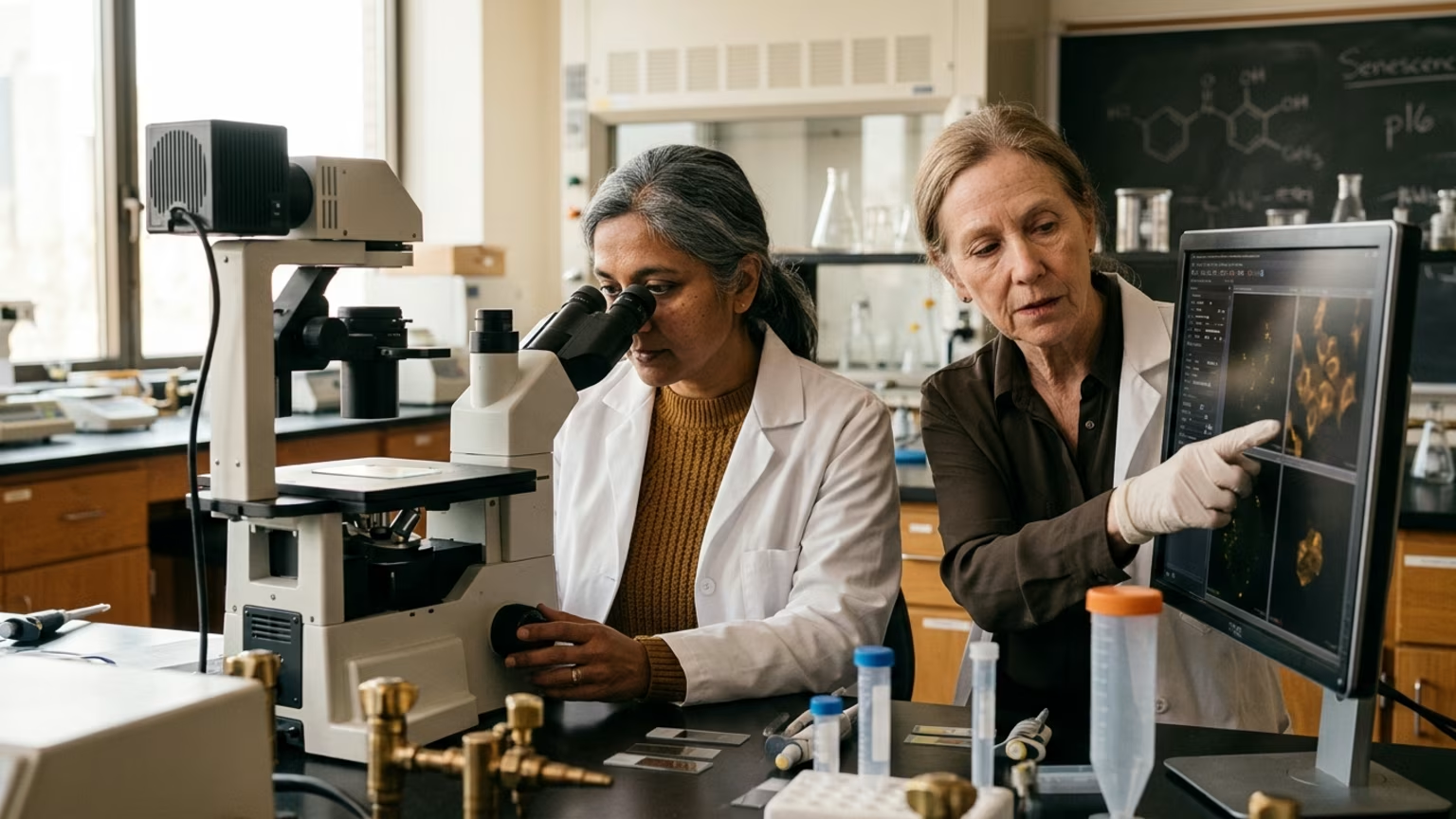

Einstein researchers link a decline in chaperone-mediated autophagy to senescent cell buildup in mice. We break down the study limits and future research.





On October 5, 2026, researchers from the Albert Einstein College of Medicine announced a new study in Nature Aging investigating how age-related cellular changes prevent the immune system from clearing senescent cells. The study was led by Ana Maria Cuervo with Rebecca Sereda serving as first author.
The research team concluded that a decline in a cellular recycling process called chaperone-mediated autophagy weakens the ability of immune cells to remove senescent cells. This decline affects both the senescent cells themselves and the macrophages responsible for tissue cleanup. The scientists identified a feedback loop that helps senescent cells persist in aging tissues and contribute to inflammation. The study suggests that supporting this cellular recycling mechanism could offer a biological approach to managing age-related cellular dysfunction.
The intervention experiments were conducted entirely in mouse models and isolated mouse macrophages, with additional observational analysis performed on human lung-tissue samples.
Cells rely on internal recycling systems to manage waste and maintain normal function over time. The researchers specifically investigated chaperone-mediated autophagy, often abbreviated as CMA. This cellular process selectively removes and recycles proteins that are damaged or no longer needed. Healthy cells use this mechanism to clear out dysfunctional components before they can accumulate and cause damage.
As organisms age, the efficiency of chaperone-mediated autophagy naturally declines. This reduction in recycling capacity has significant effects on overall cellular health and tissue function. Without efficient protein removal, cells struggle to maintain their internal balance and perform their designated roles. The Einstein researchers sought to understand how this specific decline influences the broader aging process and immune function.
Understanding this fundamental cellular process helps clarify why aging tissues often struggle to maintain their structural integrity. Readers looking to understand how these cellular changes fit into broader aging metrics can review our biology of aging and longevity science resources. Evaluating these pathways requires a firm grasp of foundational cellular biology, and distinguishing true research from early hype.
Senescent cells are cells that have permanently stopped dividing but refuse to die. They often secrete inflammatory signals that can damage surrounding healthy tissues and accelerate aging processes. In a healthy system, specialized immune cells called macrophages recognize these non-dividing cells and remove them from the body. However, this immune clearance process becomes noticeably less effective in older organisms.
The study connects declining chaperone-mediated autophagy directly to this failure in immune clearance. The researchers proposed a feedback loop that actively interferes with the normal cleanup process in aging tissues. On one side of this loop, senescent cells with impaired recycling capabilities release substances that affect their environment. These secreted substances make nearby healthy cells more likely to become senescent.
Furthermore, these secretions actively interfere with the ability of macrophages to recognize and remove the aging cells. On the other side of the loop, macrophages from older animals naturally possess lower recycling activity. This reduced internal function severely limits their ability to engulf and destroy senescent cells. Cuervo noted that this interaction may let senescent cells evade immune clearance in older organisms.
To test their hypothesis, the researchers designed a wound-healing experiment using genetically altered mice. They engineered a specific group of mice to completely lack chaperone-mediated autophagy in their macrophages. These altered mice were then compared to a control group with normal immune cell function. The scientists carefully monitored how quickly the mice healed and how senescent cells behaved at the injury sites.
The mice lacking this crucial recycling function accumulated significantly more senescent cells at their wound sites. Additionally, the genetically altered mice healed much more slowly than the control mice. This experiment demonstrated that impaired macrophage function directly compromises tissue repair and cleanup. Without efficient cleanup, the initial injury site remains caught in a prolonged state of cellular distress.
It is important to note that senescent cells are not universally harmful to tissue health. The press release notes that these cells can actually have a useful role in wound repair. They often release necessary signals that recruit other cells involved in the tissue repair process. After their repair duties are complete, healthy macrophages normally clear them away to resolve the inflammation.
After establishing the biological feedback loop, the researchers tested a potential therapeutic intervention in animals. They used a specific compound called CA77.1 to activate the impaired recycling process in aged mice. The mice received this treatment as a daily oral dose over a period of five months. The scientists then evaluated the animals for changes in tissue health and cellular buildup.
The five-month treatment reduced the buildup of senescent cells across several organs in the aged mice. The researchers also reported observable reductions in signs of inflammation and tissue fibrosis following the daily intervention. By restoring the cellular recycling pathway, the treatment appeared to improve the overall cellular environment. Cuervo described restoring this interaction as a possible alternative to trying to kill senescent cells directly.
The research team conducted additional experiments focusing specifically on isolated immune cells. They isolated macrophages from aged mice and treated them directly with the CA77.1 activator compound. The treatment successfully restored the particle-engulfing activity in these older immune cells. In fact, their engulfing ability improved to levels comparable to macrophages isolated from young mice.
In a separate experiment, the scientists utilized a specialized mouse model designed to study lung fibrosis. Early treatment with the CA77.1 compound successfully reduced the severity of the lung fibrosis in these animals. The intervention also reduced local signs of senescence and inflammation in the affected lung tissue. These results further supported the biological hypothesis linking cellular recycling to immune clearance in mice.
For more information on similar experimental approaches to cellular health, readers can read our cellular and metabolic longevity resources.
While the intervention experiments showed promise in mice, translating these findings to humans requires distinct clinical evidence. The human evidence described in the study announcement was strictly observational rather than therapeutic. Researchers analyzed lung samples taken from people diagnosed with idiopathic pulmonary fibrosis. This condition involves severe scarring in the lungs that makes breathing progressively more difficult over time.
In these human lung samples, the researchers observed a marked reduction in chaperone-mediated autophagy activity. This observation aligns with the biological mechanisms identified in the mouse models regarding tissue fibrosis and cellular decline. It suggests that similar recycling impairments might play a role in human fibrotic diseases. However, the researchers did not conduct any treatment experiments using the CA77.1 compound in human subjects.
The study received support from several organizations focused on aging research and cellular health. Backers included the U.S. National Institute on Aging, the Hevolution Foundation, the Freedom Together Foundation, and the Rainwaters Foundation. Einstein College of Medicine noted that it holds intellectual property related to the research. The institution is currently seeking licensing partners to help develop and commercialize the technology.
Those interested in the broader landscape of future therapeutics can review our longevity technology and future science articles.
The reported findings offer valuable insights into cellular biology, but readers must evaluate the inherent limitations of the research.
The next critical phase of research requires determining whether activating this cellular recycling pathway can be developed into a safe, proven treatment for humans.
Evaluating preclinical studies on chaperone-mediated autophagy requires clearly distinguishing early mouse findings from verified human treatments. AgeAmaze addresses the overstated claims around biological age, supplements, peptides and emerging therapies, helping research-minded adults understand complex biological mechanisms with enough context to recognize what is still speculative. Read the research
Stay current with research on aging biology, biomarkers, nutrition, therapeutics, peptides and longevity technology. AgeAmaze reports what the evidence shows, where uncertainty remains and which claims still need stronger data.





Follow AgeAmaze for careful reporting on what longevity science can show today and what still needs stronger evidence.
read the Blog