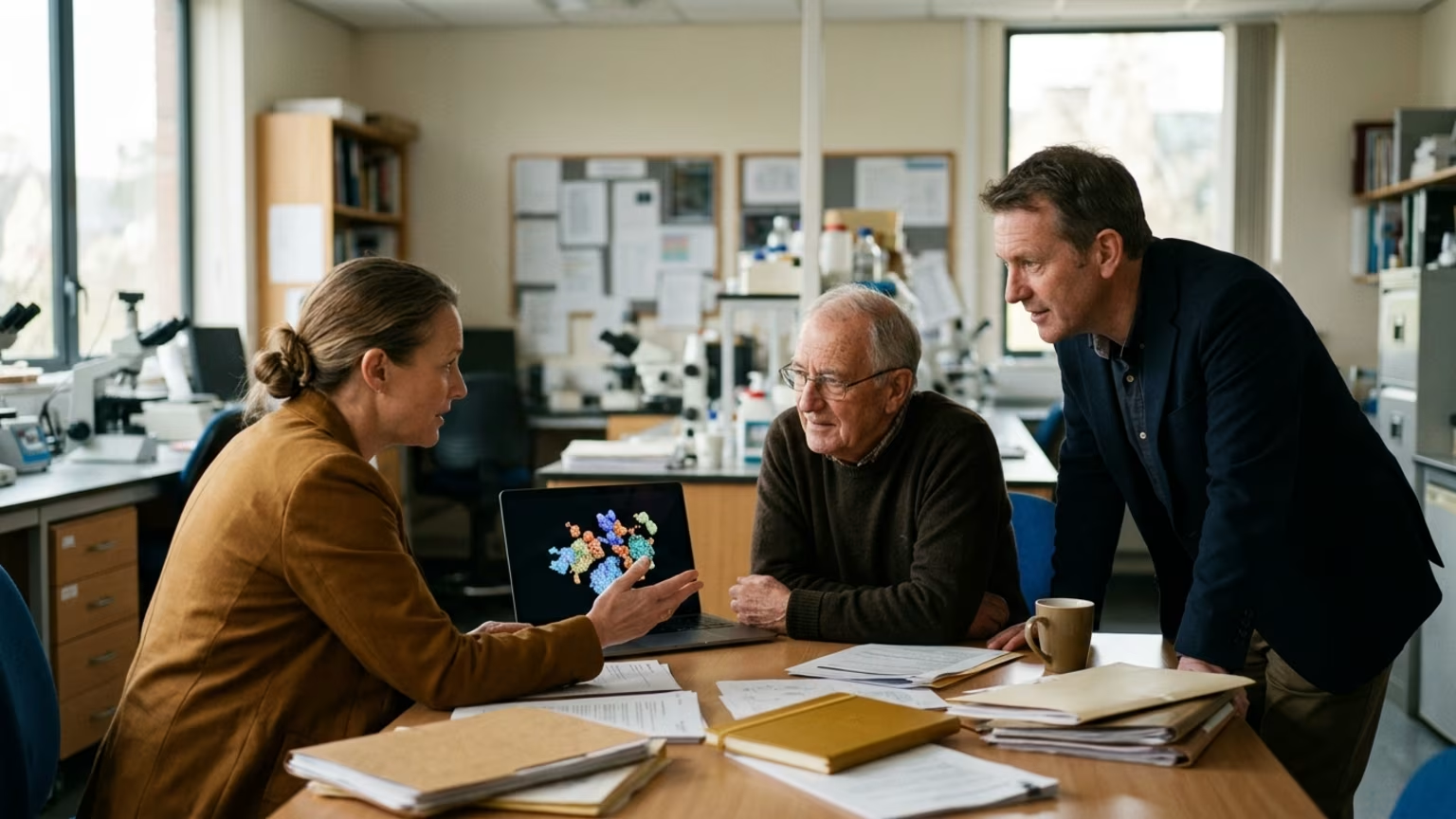

AgeAmaze reviews a new collaboration mapping age-related protein changes in rare immune cells to potentially improve vaccine efficacy for older adults.





On 11 October 2026, RNZ reported a newly launched collaboration between New Zealand's Malaghan Institute of Medical Research and Scotland's University of Dundee to investigate how immune cells change with age.
The primary objective of this cross-country project is to conduct an unbiased survey of proteins within rare immune cells from older individuals. Researchers aim to establish a detailed picture of age-related cellular changes by linking specific protein levels to functional differences in how these cells respond to vaccines. By identifying these underlying molecular patterns, scientists hope to eventually support the development of more effective immunizations for older populations.
This planned research will analyze proteins from rare immune cells collected from human blood samples.
The Malaghan Institute and University of Dundee project seeks to address a fundamental challenge in longevity science known as immunosenescence. A recent scientific review describes this phenomenon as a gradual, age-related deterioration that negatively affects both innate and adaptive immunity. As humans grow older, these systemic changes can significantly weaken overall responses to vaccines. This decline typically involves a reduction in vital T-cell and B-cell function alongside waning circulating antibody titres.
Despite the well-documented challenges of immunosenescence, the aging immune system retains important capabilities. The same recent review notes that certain critical aspects of immune memory can persist late into life. Even when circulating antibodies wane over time, older adults often maintain measurable responses to booster immunizations. This persistence suggests that the underlying cellular machinery is operating less efficiently rather than failing entirely.
Michelle Linterman, the chief scientist at the Malaghan Institute, proposed a specific biological pathway for these age-related immune declines. She suggested that cellular proteins require strict, continuous regulation through a biological housekeeper process. As this cellular housekeeping weakens with advanced age, critical proteins may become less effectively managed within the cell. This regulatory failure is currently hypothesized to be a leading reason why immune cells function less optimally in older adults.
A significant practical hurdle in mapping immune aging has been the extreme rarity of the necessary target cells. Linterman told RNZ that the specific immune cells required for this research are typically only found in the blood following a vaccination event. Because they occur in very small numbers, traditional analytical methods have historically struggled to yield accurate or comprehensive data. The collaboration with the University of Dundee provides a critical solution to this precise measurement problem.
This technological barrier has previously slowed progress in understanding vaccine efficacy in older adults. According to Linterman, Dundee has developed advanced analytical technology that enables precise protein analysis even in exceptionally small cellular populations. By utilizing this specialized equipment, researchers can extract meaningful data from the rare immune cells present in limited human blood samples. This analytical capability is the foundation that makes the entire protein mapping project possible.
While the current collaboration focuses strictly on protein analysis, other branches of geroscience are testing distinct biological interventions for immune aging. For context, a separate pilot study reported in secondary coverage in 2026 examined the relationship between the dietary compound spermidine and immune responses. This adjacent trial involved 40 adults aged 65 and older. The secondary coverage stressed that these specific scientific findings remain entirely preliminary and require validation through much larger clinical studies.
Clinical research only translates into meaningful public health benefits if the target populations actually trust the scientific process. To address this critical component, the project involves Hamilton's Rauawaawa Kaumātua Charitable Trust. This partnership is specifically designed to engage with kaumātua throughout the ongoing research process. Linterman emphasized that community trust in clinical research matters deeply if improved vaccines are to make any practical difference in society.
Engaging community leaders early in the scientific process ensures that clinical objectives remain aligned with the cultural values of the participating population. By building this trust actively, the researchers hope to facilitate better future health outcomes. A successful vaccination program requires both biological efficacy and broad community acceptance. Therefore, the sociological elements of this project are treated with the same importance as the advanced proteomic analysis.
The planned unbiased survey of cellular proteins will eventually generate complex datasets linking molecular signatures directly to vaccine efficacy. By capturing this dense proteomic data, researchers can slowly move away from generalized assumptions about biological aging. This deep cellular mapping allows scientists to potentially isolate exactly which protein pathways fail when an older adult shows a poor vaccine response. Linterman noted that better vaccines could eventually mean fewer hospitalisations and improved quality of life for older adults.
Researchers must first successfully apply this small-sample protein analysis technology to human participants before any clinical vaccine improvements can materialize.
Determining if early protein-mapping projects will yield improved vaccines requires rigorously isolating planned analytical methods from proven clinical outcomes. AgeAmaze addresses the ongoing confusion over conflicting longevity studies, ensuring research-minded adults can evaluate emerging cellular mechanisms without turning preliminary scientific hypotheses into guaranteed medical protocols. Read the research
Stay current with research on aging biology, biomarkers, nutrition, therapeutics, peptides and longevity technology. AgeAmaze reports what the evidence shows, where uncertainty remains and which claims still need stronger data.





Follow AgeAmaze for careful reporting on what longevity science can show today and what still needs stronger evidence.
read the Blog

