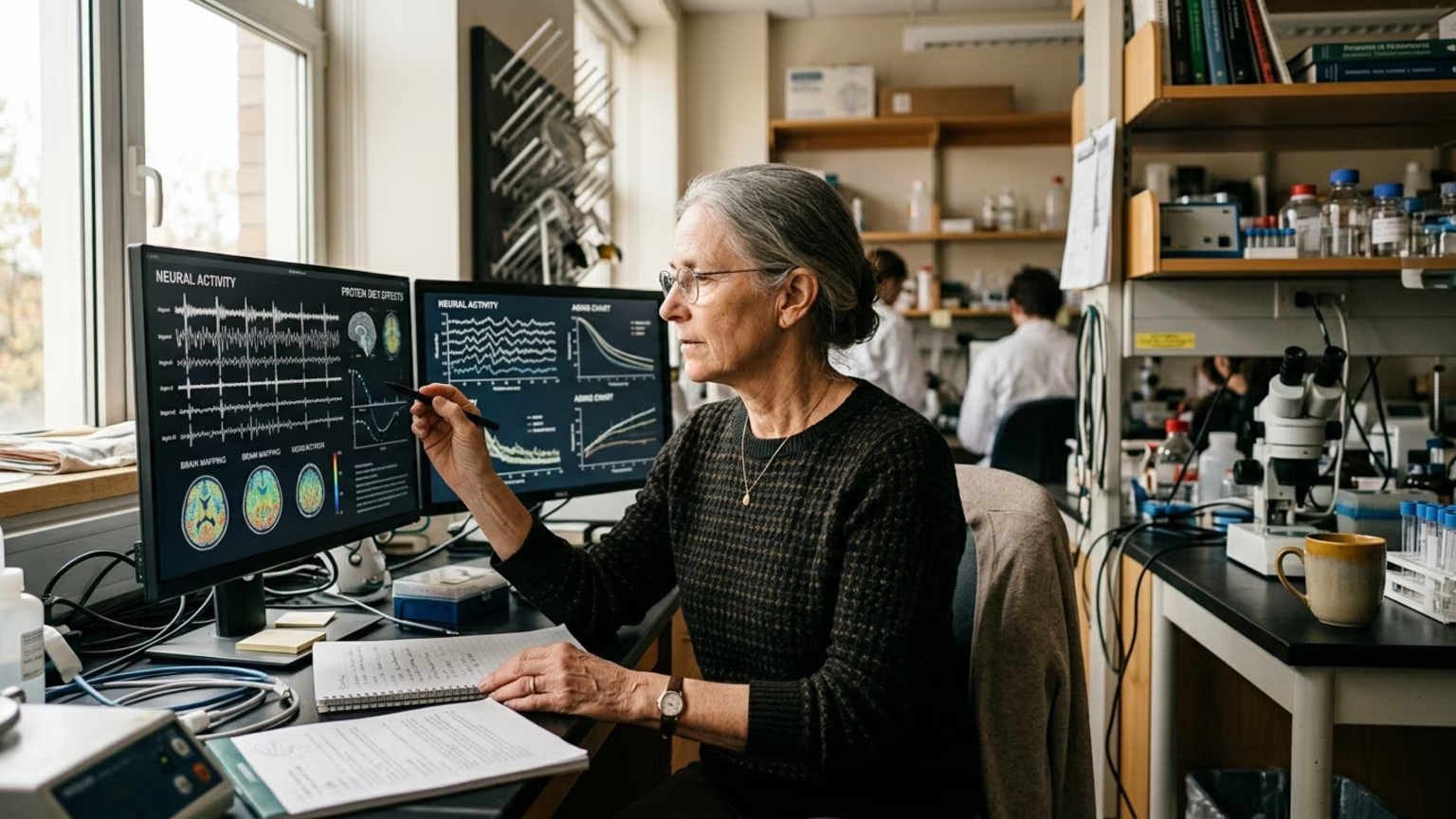

A Cell Metabolism perspective proposes that protein restriction triggers a coordinated survival response in animals, mediated by the brain and the hormone FGF21.





On August 17, 2026, researchers from Pennington Biomedical Research Center published a perspective article in Cell Metabolism. The authors proposed a new framework for how animal biology reacts to low protein availability.
The primary conclusion of this perspective proposes that the longevity effects of protein restriction are not isolated metabolic events. The researchers suggest that animals mount a coordinated physiological response to manage the nutritional scarcity. This systemic reaction connects cellular nutrient sensing, hormone signals, brain activity, and tissue physiology. The framework treats changes in metabolism, glucose regulation, and energy expenditure as connected parts of this survival program.
The supporting lifespan evidence for this proposed framework comes entirely from model organisms, such as fruit flies, rather than human clinical trials.
The proposed mechanism centers on the central nervous system acting as the main coordinator for the organism. The framework attempts to answer a basic physiological question regarding how an animal detects inadequate protein. Christopher Morrison explained the importance of this mechanism, stating, "After years of work, we now believe the brain plays a critical role in coordinating the body’s response to protein restriction." The researchers argue that the brain interprets scarcity signals and directs changes across multiple organ systems.
A key hormone called FGF21 appears to link these complex, systemic reactions together. According to the research, FGF21 acts directly in the brain to help manage the biological response to reduced protein intake. The institutional release indicates that prior work established a clear role for this specific hormone. Researchers found FGF21 was required for protein restriction to affect lifespan, metabolism, and food preferences.
Gut-derived signals also seem to affect food preferences and longevity in fruit flies. These multiple signals suggest that the body uses diverse, redundant pathways to detect nutritional deficits. The perspective places its argument within broader scientific work on how protein restriction affects aging-related biological processes. The authors highlight a necessary research direction that moves beyond studying isolated metabolic pathways.
Animals facing low protein availability experience significant shifts in fundamental biological processes like glucose regulation. Energy expenditure must adapt immediately to ensure the organism can survive the period of nutritional deficit. Physical growth rates change because the animal lacks the necessary building blocks to construct new cellular tissue. According to the new framework, these alterations should not be viewed as separate, unrelated biological events.
Instead, the authors argue that these shifts represent a highly coordinated, intentional physiological strategy. The organism actively modifies its own metabolism to protect its most critical biological functions during scarcity. This integrated approach connects cellular mechanisms with actual physical behavior, such as altering what the animal chooses to eat. Such a comprehensive shift ensures that the organism can endure prolonged periods without adequate dietary protein.
Previous scientific approaches often examined individual metabolic pathways when studying the biology of aging. This new framework connects endocrine signaling, neural circuits, and tissue physiology into a single, cohesive model. Sora Q. Kim, Sangho Yu, and Christopher D. Morrison argue that these distinct biological systems interact closely. They propose that changes in physical growth and food preferences are connected parts of the organism's response.
The authors suggest that protein appetite might serve as an observable readout of this broader adaptive program. Observing how strongly an animal seeks specific nutrients could indicate how deeply the biological response is engaged. However, the researchers specifically caution that appetite itself need not cause any direct health benefits. The drive to eat differently is simply a behavioral symptom of the underlying metabolic shift.
They suggest that FGF21 responsiveness, metabolic changes, and appetite shifts might be investigated as possible biological indicators. These physiological responses are proposed as future research tools, not as established clinical tests for human patients. Understanding these connected mechanisms remains a priority for anyone following longevity research news. Tracking how animals prioritize nutrients helps scientists map the exact biological circuits involved in lifespan regulation.
At the cellular level, nutrient sensing acts as the primary alarm system for the entire organism. Cells must continuously monitor the availability of essential amino acids to regulate their internal operations. When these building blocks become scarce, specialized cellular pathways signal that the environment has changed. This initial detection is what ultimately triggers the broader hormonal and neural responses across the body.
The researchers propose that these microscopic cellular alarms do not operate in a vacuum. Instead, they broadcast their status to the endocrine system, which then releases messengers like FGF21. This sequence demonstrates how a local deficiency in cellular nutrition escalates into a systemic biological priority. Connecting these microscopic events to large-scale physiological changes is a major focus of modern aging research.
Understanding how these cellular sensors communicate with the brain could reveal new ways to promote healthy aging. If scientists can map the exact sequence of signals, they might identify new targets for future interventions. However, translating these complex signaling cascades from insect biology to human medicine requires extensive, rigorous testing. Researchers must first confirm that these identical sensing pathways operate the same way in human patients.
This perspective encourages scientists to test how nutrient signals, hormones, and animal behavior interact together. Rather than looking at a single genetic pathway, researchers could examine the whole physiological system. The authors identify possible future questions about whether these biological responses differ based on genetics and age. Scientists also need to determine if metabolic health and biological sex change the severity of the reaction.
The source presents these variables as exciting research possibilities, not as established personalized diet tools. Future studies could clarify if the observed lifespan effects depend on specific, isolated physiological pathways. Alternatively, the biological benefits might rely entirely on the coordinated interaction of all these complex systems combined. Resolving this deep uncertainty is the next major hurdle for scientists studying nutrition and dietary supplements.
These findings offer a useful biological hypothesis about how animals manage to survive extended nutritional deficits. The framework illustrates that survival requires a comprehensive, whole-body shift in how the organism burns energy. When an animal experiences protein scarcity, its entire biological operating system must adjust to maintain delicate metabolic balance. The brain serves as the vital command center for this necessary, life-preserving adjustment.
The public should treat this finding as a useful biological hypothesis about animal physiology. It explains how animals might coordinate a complex response to lower protein availability in a controlled laboratory setting. It does not serve as evidence that people should eat less protein to improve their own healthspan. When evaluating news headlines, readers must carefully identify the actual type of scientific study being reported.
There is a massive difference between a conceptual perspective and a direct clinical intervention. Look for future human research that directly measures concrete health outcomes and verifies long-term patient safety. This perspective itself supplies neither human lifespan data nor a specific, actionable protein-intake prescription. Applying these preliminary concepts to daily human habits without proper clinical validation remains premature and unproven.
Readers must carefully distinguish a perspective article that organizes prior evidence from a new scientific experiment. This 2026 publication proposes a highly detailed way to interpret and connect prior animal research findings. It does not itself report a new test of protein restriction or a new longevity experiment. Instead, its key conceptual contribution is its proposal to connect cellular sensing, endocrine signaling, and neural circuits.
By organizing existing data, the authors provide a practical roadmap for future investigations in geroscience. The publication does not demonstrate that this specific framework is the sole explanation for observed lifespan effects. It simply offers a logical, evidence-based model to explain a highly coordinated physiological adaptive response. Evaluating these complex biological models requires separating preliminary animal biology from actual human clinical reality.
The publication leaves several important questions unresolved. Researchers must still address the following weaknesses and gaps in the current evidence:
Future research must directly test whether these coordinated brain and hormone responses occur safely and effectively in human clinical trials.
Translating a biological hypothesis about protein scarcity into actionable health decisions requires verified human outcome data. AgeAmaze clarifies exactly how dense scientific papers that are hard for non-specialists to interpret affect actual longevity, helping you avoid premature dietary changes. We evaluate complex physiological frameworks and emerging mechanisms so you understand what is established without turning early findings into promises.
Stay current with research on aging biology, biomarkers, nutrition, therapeutics, peptides and longevity technology. AgeAmaze reports what the evidence shows, where uncertainty remains and which claims still need stronger data.




Follow AgeAmaze for careful reporting on what longevity science can show today and what still needs stronger evidence.
read the Blog