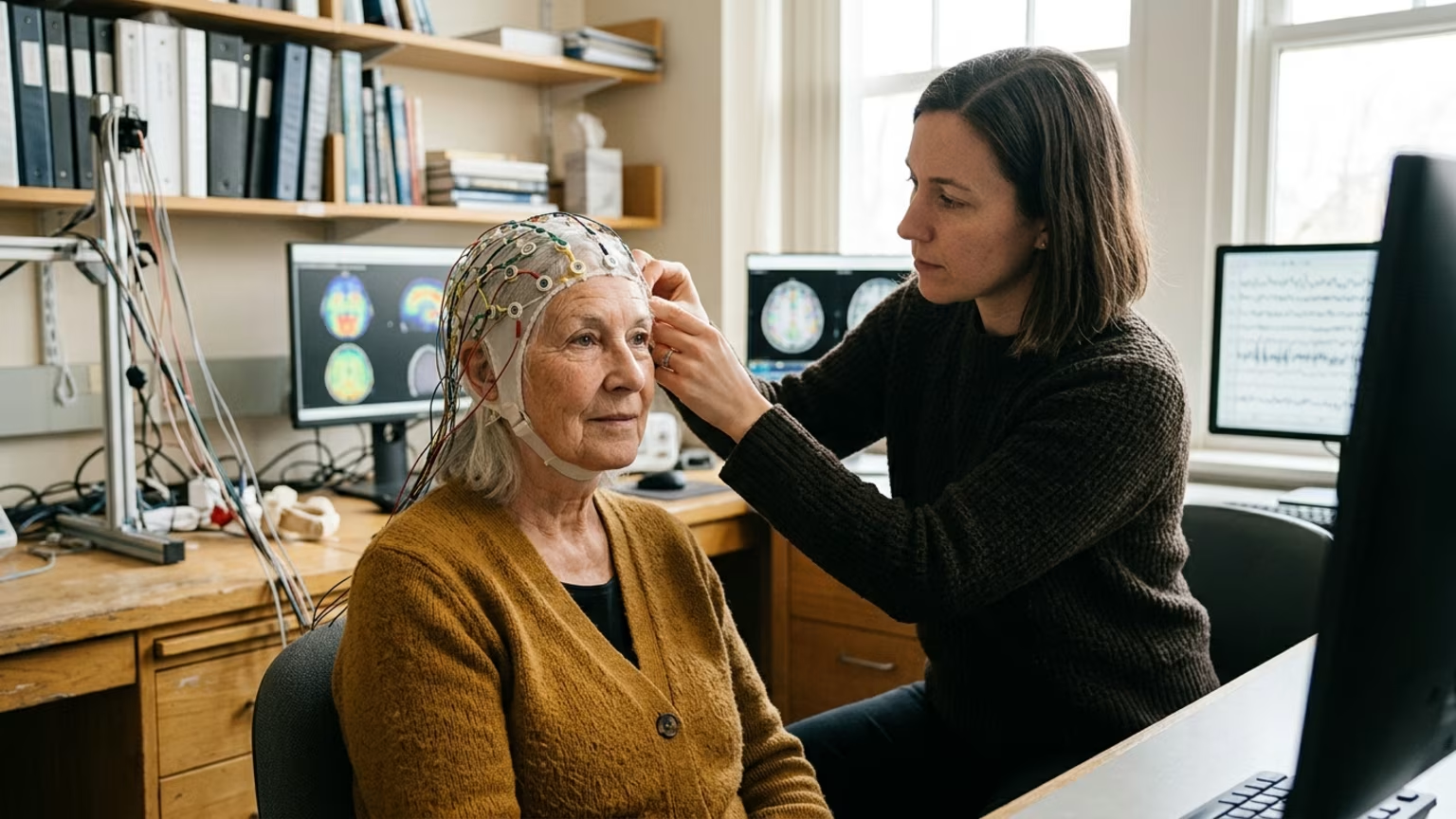

A closer look at the adaptive-aging hypothesis, its proposed memory shift and the evidence still needed to show benefits for older adults.





On 2026-09-17, the Association for Psychological Science reported on University of Arizona researchers’ adaptive-aging hypothesis, published in Perspectives on Psychological Science. Fabian-Xosé Fernandez, Sara Burke, and Lynn Nadel presented it in Aging as a Continuation of Development: A Hypothesis and Framework.
Fernandez and colleagues propose that some age-related cognitive changes reflect a shift in priorities rather than a simple loss of ability. Their framework puts less emphasis on retaining every detail of individual experiences and more on using accumulated knowledge to interpret those experiences. Its relevance to healthy aging is the possibility that different kinds of thinking serve different purposes across life. The central question is whether a change in memory style supports useful cognition in later adulthood.
Evidence base: Prior human and animal-model research, plus molecular biology and neuroimaging. This is a hypothesis paper rather than a new experiment in humans or animals.
The proposed neural account involves relatively less reliance on hippocampal processing associated with detailed episodic memories. It places greater emphasis on cortical or frontal systems associated with meaning and knowledge. In this interpretation, remembering an experience’s broader significance receives more weight than preserving its individual details.
A secondary account of the paper describes St Jacques and Levine’s 2007 study as a behavioral example. Older adults recalled more external details, particularly semantic information. Younger adults recalled more internal details, largely episodic information. This example illustrates the kind of difference the framework seeks to explain.
In the Association for Psychological Science’s coverage, Fernandez described the older brain as potentially “optimized for different things than the younger brain.” He emphasized sharing stored expertise and social relationships. That framing places the hypothesis within a discussion of normal cognitive change, rather than treating every memory task as a measure of the same ability.
Several questions determine how much weight this framework deserves:
For readers weighing brain-aging evidence, the practical distinction is between engaging with ideas and making a health decision. The secondary report identifies physical activity and management of cardiovascular and metabolic risks as established brain-health approaches. Personal prevention decisions and concerns about worsening memory belong with a qualified health professional.
The next useful test is a human study that measures whether the proposed shift in memory and brain-system use predicts better knowledge integration or social judgment in everyday life.
Assessing the adaptive-aging proposal means deciding how animal observations relate to human cognition; AgeAmaze brings readable context to that comparison. When those evidence types blur together, the publication clarifies their different roles and the biological ideas involved so research-minded adults can assess emerging longevity science without mistaking a proposed explanation for a demonstrated human benefit.
Stay current with research on aging biology, biomarkers, nutrition, therapeutics, peptides and longevity technology. AgeAmaze reports what the evidence shows, where uncertainty remains and which claims still need stronger data.





Follow AgeAmaze for careful reporting on what longevity science can show today and what still needs stronger evidence.
read the Blog

